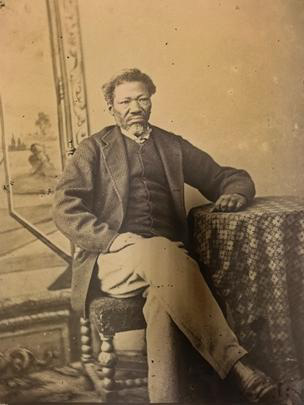
TRIBUTE TO HARRY JANUARY TLHARIPANE MOHALE (1942-1996)
By: Abraham Mohale, Junior Curator: DITSONG: National Museum of Military History
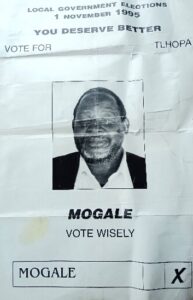
Figure 1. Mr Harry January Mohale, May 1995 (Photograph). Source: IEC Independent Electoral Commission.
Introduction
A short, round figure with a constant smile on his face and a characteristic leaning stance was a familiar presence at nearly every meeting my late father, Harry January Mohale, attended with blind or disabled individuals in this country. Anyone involved in organisational work in this field from the early 1970s to the late 1990s knew Harry Mohale as a dedicated activist and a prominent member of the disabled people’s movement. He was the kind of a person management consultants love to assist at the grassroots level, as he easily absorbed organisational support. Unlike many others at the time, Harry didn’t not shy away from the hard work of getting things done. He used to serve willingly on committees, dedicating hours to travel and attending numerous meetings.
His Active Roles in Disability Organisations
Harry was proud to be involved in the destiny of disabled South Africans. He served in various prominent roles, including:
- Deputy Chairperson of the then Midlands branch of the National Organization of Blind South Africa (NOBSA);
- Deputy Chairperson of Disabled Persons of South Africa;
- President of Amalgamated Blind of South Africa (ABSA);
- Co-opted member of the executive committee of the South African National Council for the Blind (SANCB); and
- He further occupied a position of Public Relations Officer of the South African Blind Sport Association.
From the horse’s mouth, he once told me that it all began in 1973, a year before I was born. He was inspired by the late Mama Ruth Machobane in Soweto township. She later became a close friend and confidant to him. Together with Mama Ruth, they organised blind individuals to form an organisation called the Transvaal Association of Blind Black Adults (TABBA). At that time, the country was still under the dark days of apartheid, and organisations were, of course, registered racially.
After being organised by the South African National Council for the Blind (SANCB) in 1978, TABBA grew from strength to strength, eventually becoming a national organisation in 1990. It was renamed the National Organisation of the Blind in South Africa (NOBSA). It had six branches in the then Transvaal region, as well as additional branches in Port Elizabeth (Eastern Cape), and Durban (KwaZulu Natal). In 1980, TABBA, the Transvaal Association of Blind Black Adults, and some smaller associations, such as the Lighthouse Club for the Blind came together for a seminar. The theme of the seminar was “What can we do now?” The agreement reached during the gathering in 1986 led to the establishment of a self-help organisation called The Associated Blinds of South Africa (ABSA). ABSA became the umbrella administrator for all blind organisations in the country. Harry strongly believed in the importance of having an organisation run by visually disabled people, rather than for them, and the establishment of ABSA was a key factor in motivating South Africa’s inclusion in the World Blind Union in 1992. It was because of Harry’s involvement with Disabled Persons South Africa, that he was honoured with the Excelsior Award in 1986.This award, presented annually by the then State President of the Republic of South Africa, PW Botha, recognised individuals – both disabled and able-bodied – who had made outstanding contributions in the field of disability.
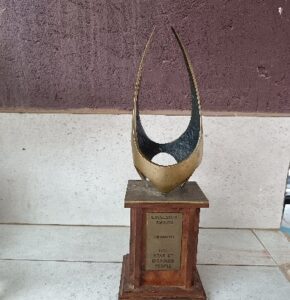
Figure 2. The Excelsior Award, presented to Mr Harry Mohale by the then State President of South Africa, Mr PW Botha, in 1986.
His Awards and Achievements
Harry January Tlharipane Mohale was born on 19 December 1942 on the farm De Hoop in Tuinplaas, Waterberg District (Limpopo Province). His father’s name was Jacob, and his mother’s name was Salome. He was the last-born of three children, with two sisters. Harry was eleven years old when he finally secured a place at Athlone School for the Blind in Cape Town. He went on to obtain his junior certificate and “Hoër Taalbond Eksamen”. He trained as a telephonist at the then Enzenzeleni Blind Institute and became the telephone instructor there in 1965. In 1966 he worked for Burnside Engineering in the factory. Later, he was appointed as a telephonist, operating the municipal switchboard under the Mamelodi City Council, a Bantu administration at the time, which was part of the Pretoria City Council. He continued working for the municipality until his passing in 1996. Harry married Godelieve Mabogoane, also blind, on the 6th of April 1973. They were blessed with four children: Jacob, Abraham, Lydia and John. A devout Catholic, Harry was an active member of the church’s musical choir, known as the Saints Blind Choir. His love for music led him, in the 1980s, to record a Sotho mbaqanga album called Tshankaneng (meaning “prison”) with his longtime friend, the late Mr Simon Falatsi. The group was called Marumo (meaning “spears”). He mastered almost all South African languages. He had a great sense of humour, was very humble, and lived by strong principles. He was also known for his remarkable discipline and his ability to inspire others.
In 1994 Mr Harry Mohale was invited by the office of the late President Nelson Mandela to assist the office of Former Minister without Portfolio, Mr Jay Naidoo, in guiding, aligning and constructing strategic policies and implementations for disabled people in the new democratic South Africa. Mr Mohale recommended his confidant, Mam Ruth Machobane, and later also recommended Hendrietta Bogopane-Zulu, who was subsequently appointed as the Deputy Minister of Social Development. She held this position until recently when the new 7th administration Government of National Unity was formed under President Cyril Ramaphosa.
Harry Mohale passed away of a heart attack at the Waterkloof Pretoria offices of the South African National Council for the Blind on 5 May 1996, while attending a scheduled meeting. His organisation, the National Council for the Blind, purchased a befitting burial casket, and his name was honoured as an honorary founder and member. At the time, I used to underestimate his role within the organisation, but everything changed when I saw the mass of people attending his funeral. The programme was packed, and it was hard to quiet every mourner who wanted to speak. His comrades from the Pan Africanist Congress (PAC) of Azania honoured him with an African homemade stick and a leopard blanket as tokens of appreciation for his selfless Pan Africanism values and for his great dedication to socialist principles, and for bluntly refusing to join the National Party when he was recruited by Roelf Meyer and Marthinus van Schalkwyk.

Figure 3 and 4. National Disability Posthumous Award and Certificate from the South African Ministry of Social Development, 2015.
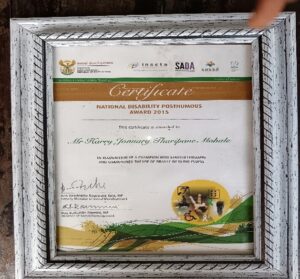
Figure 3 and 4. National Disability Posthumous Award and Certificate from the South African Ministry of Social Development, 2015.
For his selfless service, tireless commitment, and recognition as a pioneer of disabled persons’ rights and development, the Mohale family was invited by former President Jacob Zuma, under the ministry of Minister Bathabile Dlamini, in partnership with the National Development Agency( NDA), the South African Social Security Agency (SASSA), the South African Disability Alliance (SADA) and the Insurance Sector Education and Training Authority (INSETA), to a gala dinner at the St Georges Hotel in Irene, Pretoria, in 2015. The late Harry Mohale was posthumously awarded the National Disability Posthumous Award for his significant contributions to the development of Braille writing and pioneering factories and labour workshops for both disabled and able-bodied individuals. While most of these workshops have since collapsed, the Itireleng Workshop for the Blind in Ga-Rankuwa township, near Pretoria North, continues to operate. The then Deputy Minister of Social Development Henrietta Zulu, who is also partially blind, was entrusted with presenting the award to the Mohale family, as she had been educated, mentored and trained by her late leader, Harry January Mohale, and recommended to the government by him. Harry Mohale continues to receive posthumous awards from disabled schools, new disability organisations, and government agencies. The Mohale family is regularly invited to attend these events.
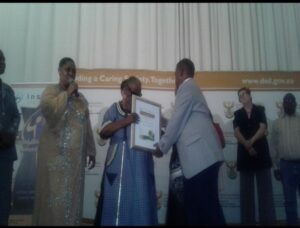
Figure 5: Presentation of the National Disability Posthumous Award, 2015, in honour of the late Harry Mohale. The award was presented by Deputy Minister Hendrietta Bogopane-Zulu to Godelieve Mohale and Abraham Mohale at St. George’s Hotel in Irene.
Conclusion
Harry is quoted in Dr William Rowland’s thesis. Rowland, one of the pioneers of the South African National Council for the Blind and its lifetime chairperson, referenced Harry’s words from 1981, when he expressed his struggles as a blind person in the world. Harry said, ”Although the radio, books and magazines help to relieve the loneliness and boredom, I am still worried and frustrated.“ He further shared that at school, it was often said that blind people could work, have families and live normal lives. “I am just unlucky,” he stated (Page 12). His famous last words were, “It is my wish to see that all disabled people are made active in all walks of life and not secluded in institutions or homes.” Ironically, “Mohale” is the nickname given by the Basotho people of Lesotho to Prince Harry of England, and it means “the brave warrior” in Sesotho. The local township affectionately called him “Prince Harry” or “Uncle H,” and even his family, including his children, referred to him as “Uncle H.” His tombstone bears the inscription “Rest in Peace, Uncle H.” in bold lettering. May his spirit and his teachings – particularly his advocacy for respect and inclusion of both disabled and able-bodied people – continue to inspire humanity and future generations.
References
Anne Phillips, “A Person of Enterprise” in Infama blind Magazine, South African National Council for the Blinds, 1994.Disability awards: Department of Social Development of South Africa, information broadcast, 2015.
Oral Interviews, Abaraham Mohale, 2025: Mohale family, oral history and interviews.