FACES WITHOUT NAMES: UNNAMED AFRICAN PHOTOGRAPHS, COLONIAL DOCUMENTATION AND ARCHIVAL SILENCE
A Reflection from the DITSONG: National Museum of Cultural History
By: Nthabiseng Mokwena (Nzuza), Junior Curator, DITSONG: National Museum of Cultural History
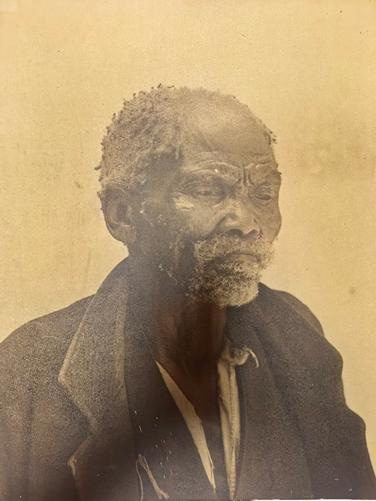
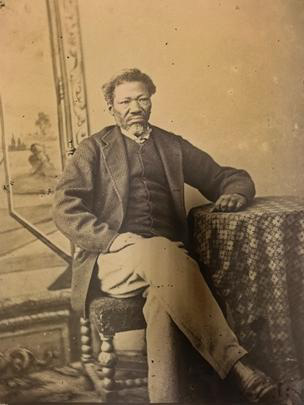
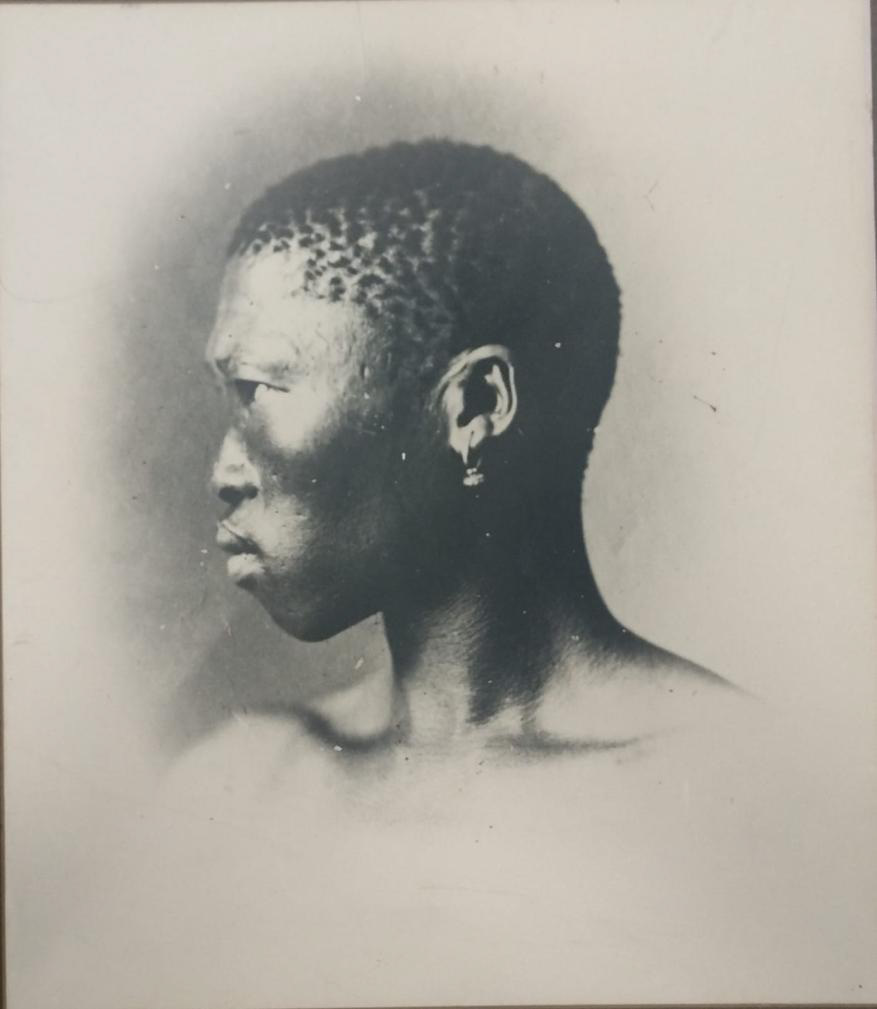
Photograph found in the Collection with no Provenance
The South African Museum Archives has a large catalogue of photographs of African people that originates from the colonial and apartheid period. Many of the images feature individuals whose identity has thus far not been recorded in the museum’s catalogue, and as a result, many are just referred to as ‘Kaffir’, ‘native’ or ‘tribesman’. Some have simply been labelled as ‘unknown’. Drawing on verification work conducted at the DITSONG: National Museum of Cultural History during 2026, this article examines why this anonymity persists, tracing it through colonial ethnographic conventions, apartheid bureaucratic systems, and archival theory. Using the frameworks of Achille Mbembe and Michel-Rolph Trouillot, the article argues that the absence of names is not an accidental administrative oversight. Instead, it is a structural consequence of knowledge systems that consistently prioritised the documentation of African bodies over African identities. The article concludes with a discussion of contemporary decolonising practices that seek to restore dignity and context to these unnamed faces.
Introduction
In March 2026, while undertaking the routine verification of the collection of Historical Documents and Photographs at DITSONG: National Museum of Cultural History (DNMCH), several photographic records depicting Black South African men, women and children were noted without any identifiers. Only a few included personal details, such as date of birth and address. It was not possible to describe or contextualise the reasons for some of the associations and groupings. This practical frustration became the seed of a broader enquiry: why were so many African people photographed, yet so few of them named? Why has known historical figures not been identified in these collections?
Museums across South Africa have accumulated extensive visual archives intended to document the nation’s cultural and social history. Yet within these institutions, an enduring paradox persists. African people are frequently, and often prominently, present in historical photographs yet they remain anonymous in most of these depictions. Labels commonly employ archaic and reductive terminology such as ‘Kaffirs’, ‘native’, ‘tribesman’, or ‘unknown woman’. Such terms describe racial or cultural categories rather than acknowledge individuals as historical agents with biographies, relationships, and names (Hayes 2010; Newbury 2009).
Anonymity in collections cannot be attributed to carelessness or chance; it is the result of a deliberate colonial, and later apartheid, epistemological framework for knowledge creation through the documentation of African bodies but treating African identity as an afterthought or insignificance. The DNMCH was established out of the Staatsmuseum of the Zuid-Afrikaansche Republiek in the nineteenth century. As such, it is a prime example of how these documentation trends can be traced and explore how museums may address these issues.
Colonial photography and the construction of anonymous subjects
Photography entered southern Africa as a technological development intimately tied to colonial expansions and associated scientific undertakings. From early on, cameras were employed not only as devices to create likenesses, but also as devices to classify populations into different race groups, types of labour and ethnographically different individuals. The camera, in this context, served the production of colonial knowledge rather than the preservation of personal memory (Rizzo 2019).
Scholars working in the field of colonial visual culture argue that the photographic encounter frequently reduced people to representations of type rather than recording them as individuals with histories and social relationships (Hayes 2010). In anthropometric and ethnographic photography, a prominent genre across sub-Saharan Africa during the late nineteenth and early twentieth centuries, subjects were positioned and labelled according to classificatory systems designed to serve European scientific and administrative interests. The individual’s name was not simply unimportant; it was structurally irrelevant to the purpose of the image (Coombe 2003).
This epistemological approach produced what might be called the ‘unnamed image’, a photograph that preserves a person’s likeness while erasing their biography. The subject becomes a visual specimen that is useful for illustrating a ‘type’ or cultural category but stripped of the relational and social context that would make individual identification possible or desirable. Naming, in this archival logic, was not an oversight but an absence by design (Basu 2025). As Paul Basu has noted in his work on colonial photographic archives, the decolonisation of museum collections requires not the dismissal of these images as tainted but a more critical examination of what they reveal about the structures of coloniality itself (Basu 2025).
Many of the photographs that are held within the DNMCH collection reflect this epistemological approach. Labels prioritise objects, clothing, and perceived cultural practices over individual identity. Archaic racial terminology persists in catalogue descriptions, an outcome of the bureaucratic and scientific contexts in which photographs were originally created. This persistence demonstrates the extent to which museums continue to inherit the system of describing objects based on (uneven) power dynamics. Contemporary ethical standards that challenge and deconstruct this descriptive framework are increasingly shaping archival documentation approaches (Coombes 2003; Newbury 2009).
Staged photograph in the DNMCH collection with no provenance.
Adam Kok III, the leader of the Griqua people in South Africa during the nineteenth century.
Source: South African History Online. (2011, March 16), https://sahistory.org.za/dated-event/adam-kok-iii-killed-accident
The researcher’s encounter: frustration and responsibility
There is a unique intellectual and emotional response to working with unidentified or anonymous photographs. The viewers will know that the subjects of photos in which people are looking toward the camera (e.g., mothers and babies, groups of men outside buildings, naked or half-naked children, and children dressed in suits) are all humans. However, without any additional information, such as names, dates, or contextual notes, it would be difficult to ascertain the identity of those represented in a picture.
This problem can have significant methodological as well as ethical implications for any exhibition, for example. Due to the inability to identify individuals in photographs, the exhibition narrative(s) will need to remain generic – grouping subjects under broad themes such as ‘time periods’ or ‘geographical communities’ versus narratives based on the experiences of the actual subjects in the photographs. Descendants seeking to trace relatives through institutional collections also encounter barriers. As such, museums struggle to develop exhibitions that connect communities to their own histories through actual people rather than representative types. Each unnamed photograph represents a partial record that presents an interrupted documentation that risks becoming a forgotten fragment (Trouillot 1995).
Oral history projects offer one mechanism for bridging this gap. Several South African institutions, for example, the Centre for Popular Memory at the University of Cape Town, South African History Archive at the University of the Witwatersrand, and Sinomlando Centre at the University of KwaZulu-Natal, have undertaken sustained work to record community memories and connect those memories to visual materials held in institutional collections (Archive and Public Culture Research Initiative 2013). These methodological approaches demonstrate that archival gaps, while sometimes irreducible, are not always permanent.
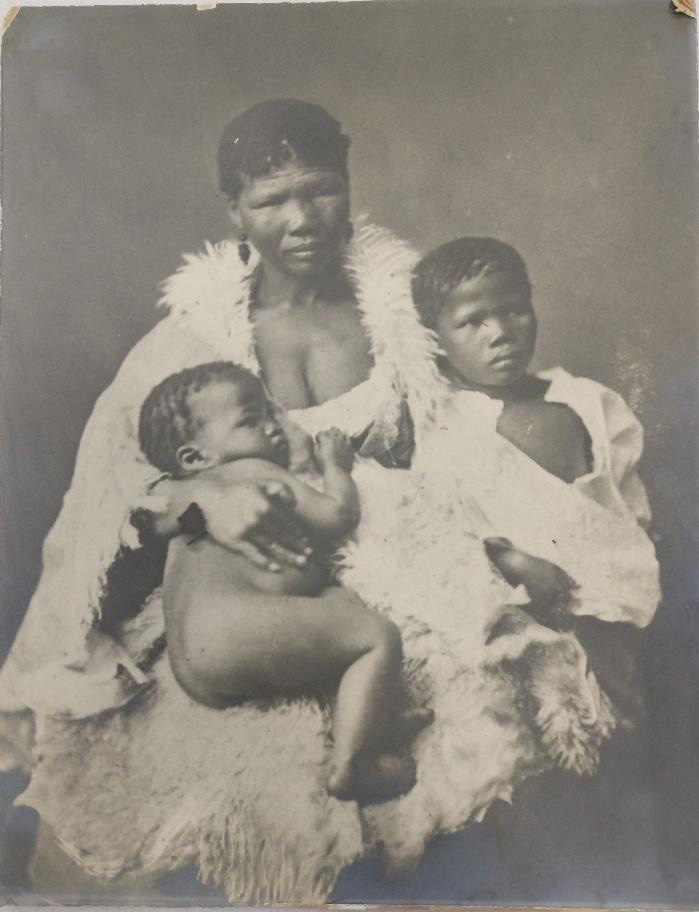
Staged photograph in the DNMCH Collection with no provenance.
Photograph of an unnamed Khoisan woman and children source: https://www.walthercollection.com/en/collection/artworks/inscribed-bushwoman-children-s.-africa-portrait-of-kweiten-ta-ken. The photograph is an albumen print titled ‘Bushwoman and children in South Africa identified as! Kweiten ta //ken’ and the portrait was taken by Samuel Baylis Barnard between 1874 and 1875.
Apartheid bureaucracy and the persistence of photographic anonymity
There is a conundrum in how photography relates to people’s sense of identity due to apartheid, as large collections of photographs of Black South Africans were amassed while simultaneously developing ever present ways to ensure their anonymity. The Natives (Abolition of Passes and Co-ordination of Documents) Act of 1952 required all Black South Africans above 16 years of age to carry a ‘reference book’ that had their photo, national identification number, racial group, fingerprints, employment, and ethnic group or tribe (South African History Online 2019; ‘Pass law’ 2024).
The reference book photograph was, in this context, an instrument of state surveillance and population control rather than a record of personal identity in any humanistic sense. The photograph confirmed administrative categories, racial group, labour status, and residential entitlement rather than affirming the personhood of the individual depicted. When such photographs, along with materials generated through police records, government surveys, and administrative transfers, entered museum collections following the end of apartheid, they frequently arrived without the contextual records that had given them their original administrative meaning (Newbury 2009). The administrative system from which the images had derived was no longer operational and the contextual thread connecting image to individual had been severed.
The result was an archive with significant visual representation but little narrative continuity. Museums received photographs of recognisable people with unrecoverable identities. Archival silence, as Trouillot (1995) has argued, is always the cumulative result of specific decisions and practices at each stage of the archival process, from the initial act of recording to the subsequent management, transfer, and cataloguing of materials. In the case of South African photographic archives, anonymity was produced at multiple points, through the colonial classificatory conventions that initially devalued naming, to the administrative depersonalisation of apartheid documentation systems, and the institutional separations when images moved into museum collections.
Ethical dimensions: consent, staging, and representation
One major ethical concern regarding the unnamed photographs within South African museum collections is the issue of consent. Most historical photographs were taken in unequal power situations between the subject of the photo and the photographer. As a result, many subjects photographed during the colonial and apartheid periods did not understand how their images would be used. They did not understand what institution would eventually hold their images, nor did they have a sense of how long their likenesses could be used and viewed (Digital Benin n.d.).
A further dimension of this ethical complexity involves staging. Ethnographic photography frequently required subjects to be positioned, costumed, or otherwise arranged to meet the criteria of what colonial researchers understood as ‘authentic’ cultural representation. These portrayals cemented African stereotypes. The photographs created a visual representation far removed from the lived reality of those photographed (Rizzo 2019). The unnamed individual has therefore experienced two erasures: the physical and social context of the photograph, and the understanding of how to interpret and organise or display the photograph.
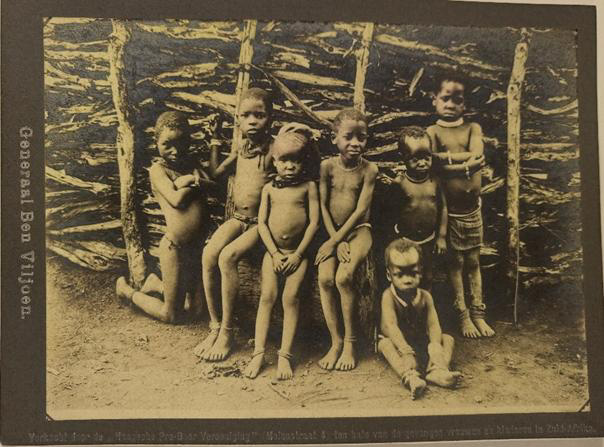
Photograph in the DNMCH collection with no provenance
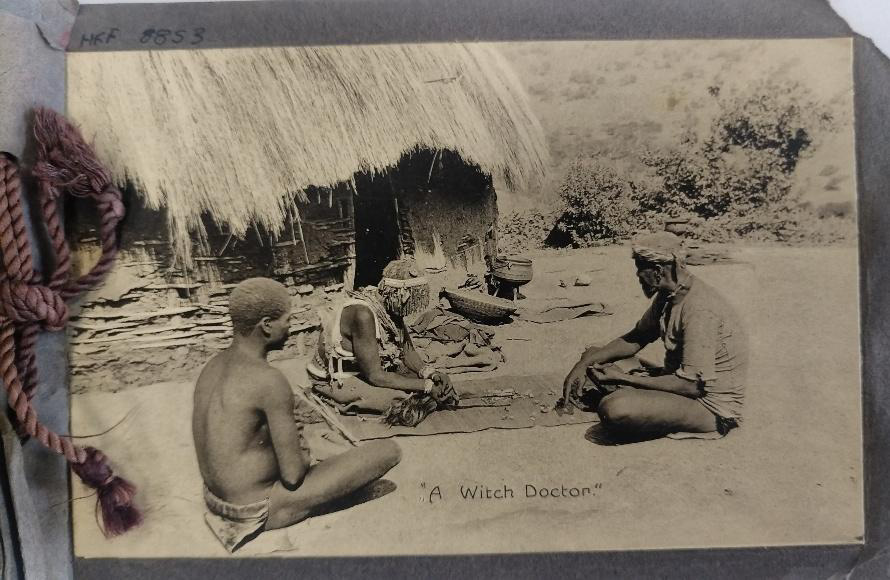
Staged photograph in the DNMCH collection titled “A Witch Doctor”
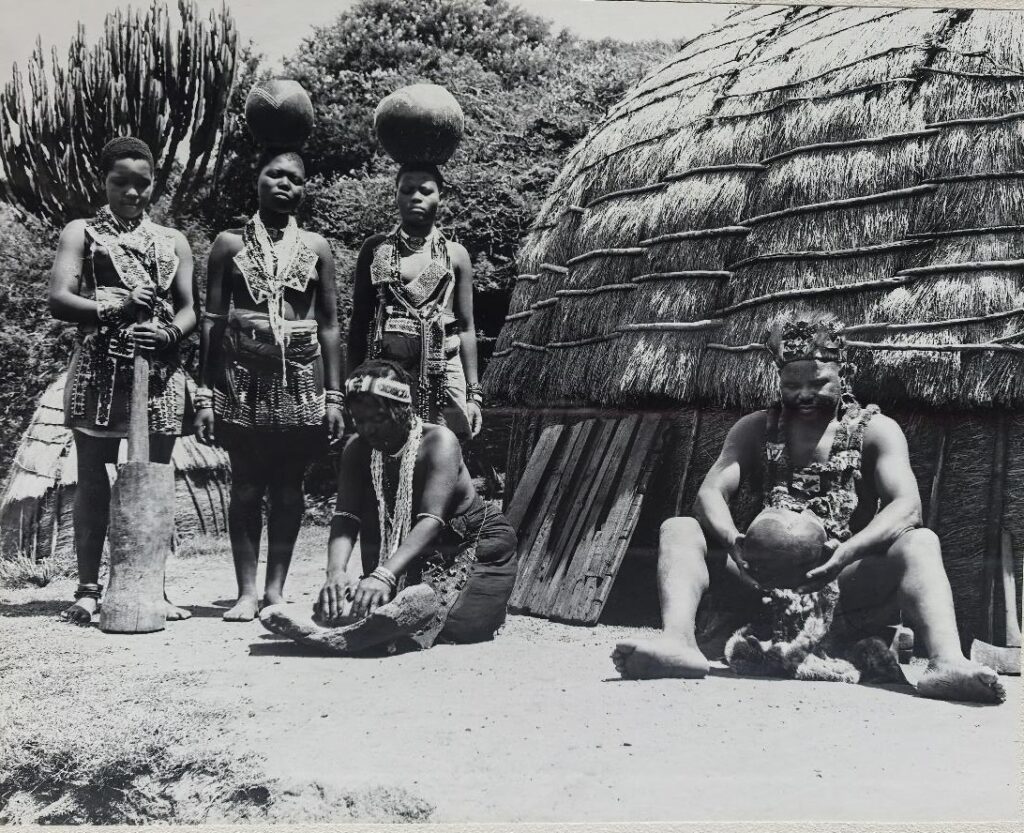
Staged photograph in the DNMCH collection with no provenance
The archive as a site of power and silence
The theoretical resources most useful for understanding the dynamics described here have largely been developed outside museum studies, in postcolonial and decolonial thought. Achille Mbembe (2002) provides an excellent clarification of the archive as an area of authority. As a result, Mbembe argues that the mechanisms for creating, coding, and selecting documents that are entered into the archive go beyond simply collecting and recording ‘data’ to include determining what is regarded as ‘knowledge’. At the same time, designing a method for creating and maintaining an archive allows some subjects and voices to be elevated and others to be silenced by either exclusion or the preservation of the historical record.
The idea of “historical silence” by Michel-Rolph Trouillot (1995) provides another approach to analysing the phenomenon of silencing. According to Trouillot, historical silences have the potential to manifest within the development of the historical record through four distinct but related stages, the creation of sources, the creation of archives, the creation of narratives, and the establishment of retrospective significance. The absence of names in photographic records represents one such silence produced at the earliest stage and in the initial act of labelling and cataloguing; its effects cumulate over time as the possibility of recovery diminishes. Today’s researchers are faced with history’s structural absence and the distraction of the identity of the people visually preserved in the historic record who have been anonymised. The unnamed photograph problem exists because of the systemic organisation of certain value judgments on whose identity matters and whose does not. It is therefore necessary to rethink the purpose of museum archives, who they are intended to serve, and to change existing systematic record-keeping practices to address the issue.
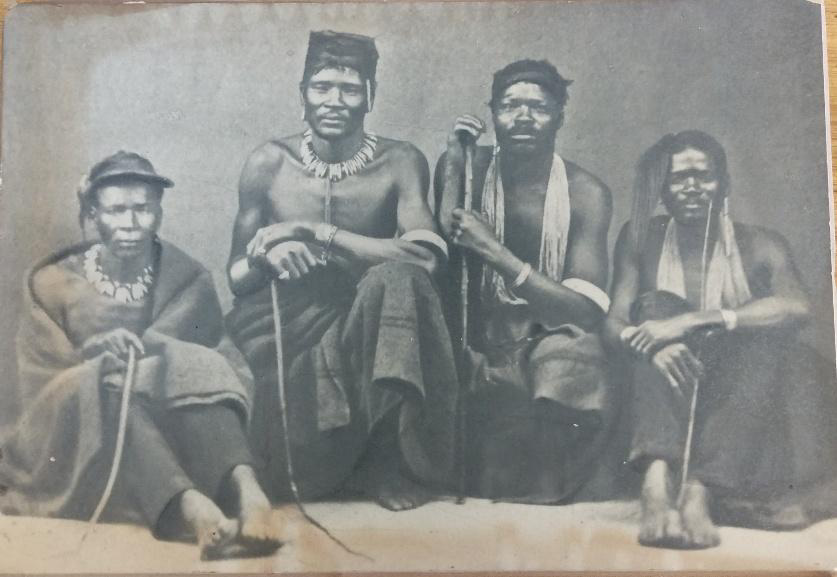
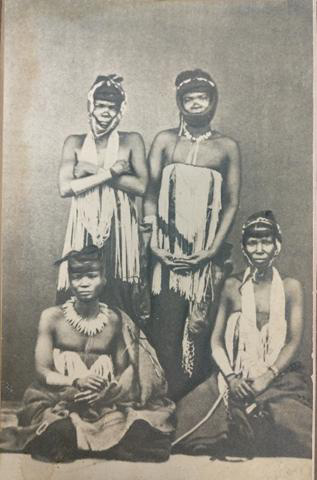
DNMCH Accession Number: HC 2688 (The photographs share the same Acc. Number) Staged photographs in the DNMCH collection with no provenance.
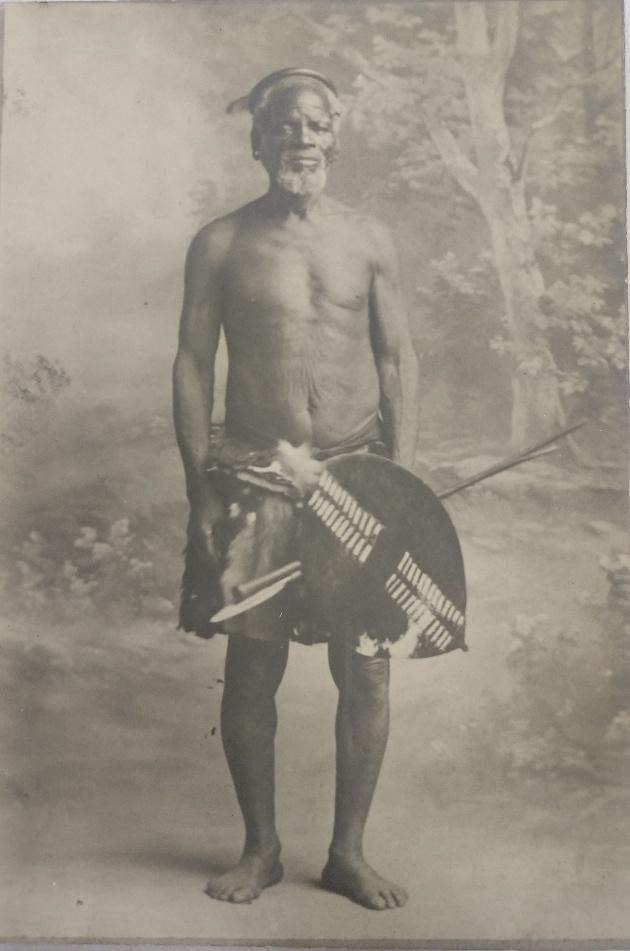

DNMCH Accession Number: HKF 1698 and HKF 1554Staged photographs in the DNMCH collection with no provenance
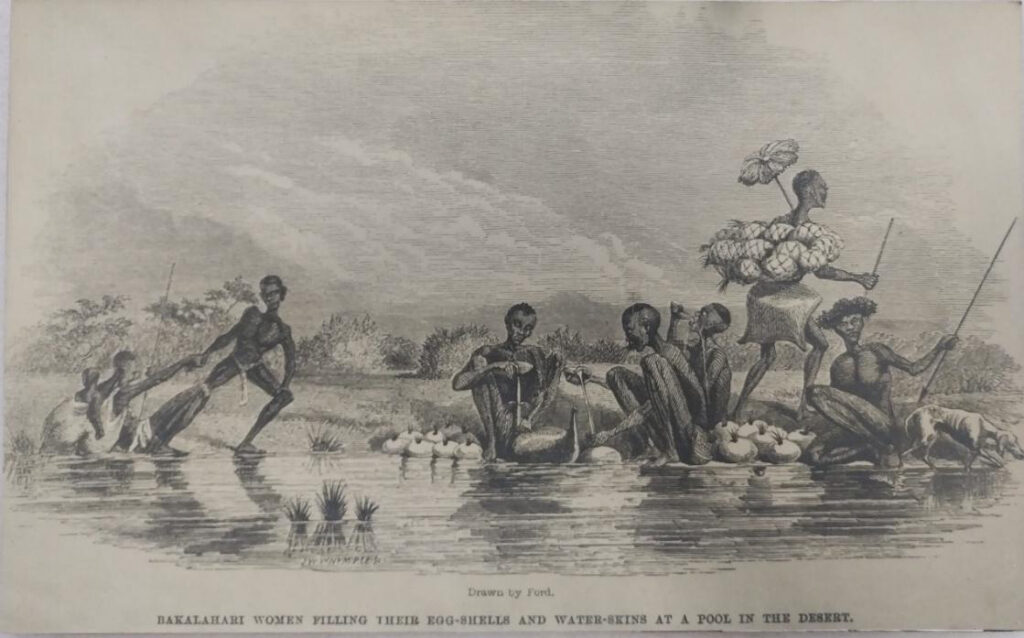
Print in the DNMCH collection with no provenance, titled “Bakalahari women filling their egg-shells and water-skins at a pool in the dessert”
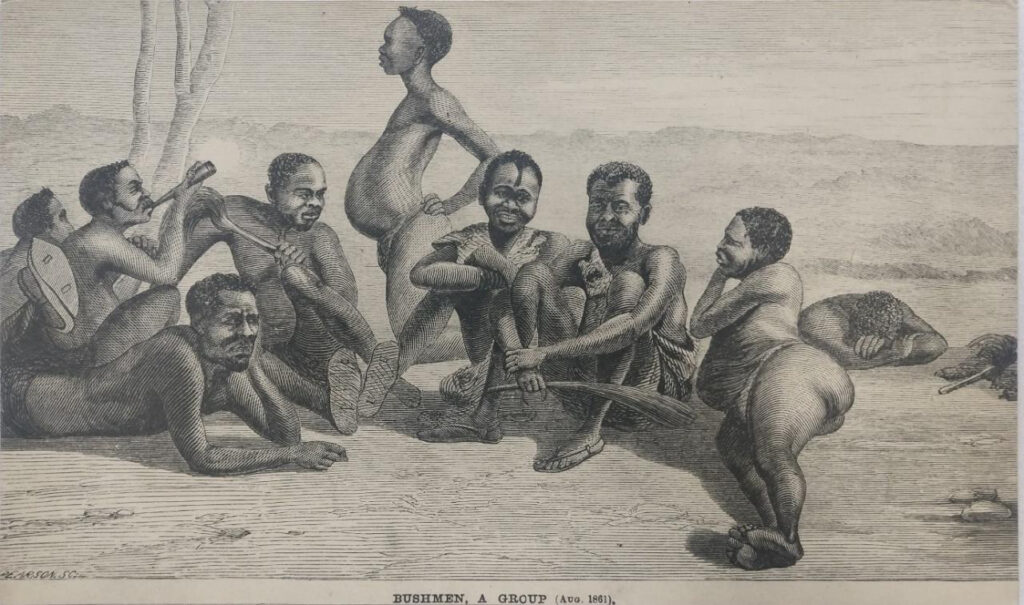
Print in the DNMCH collection with no provenance, titled “Bushmen, a group (Aug, 1861)”.
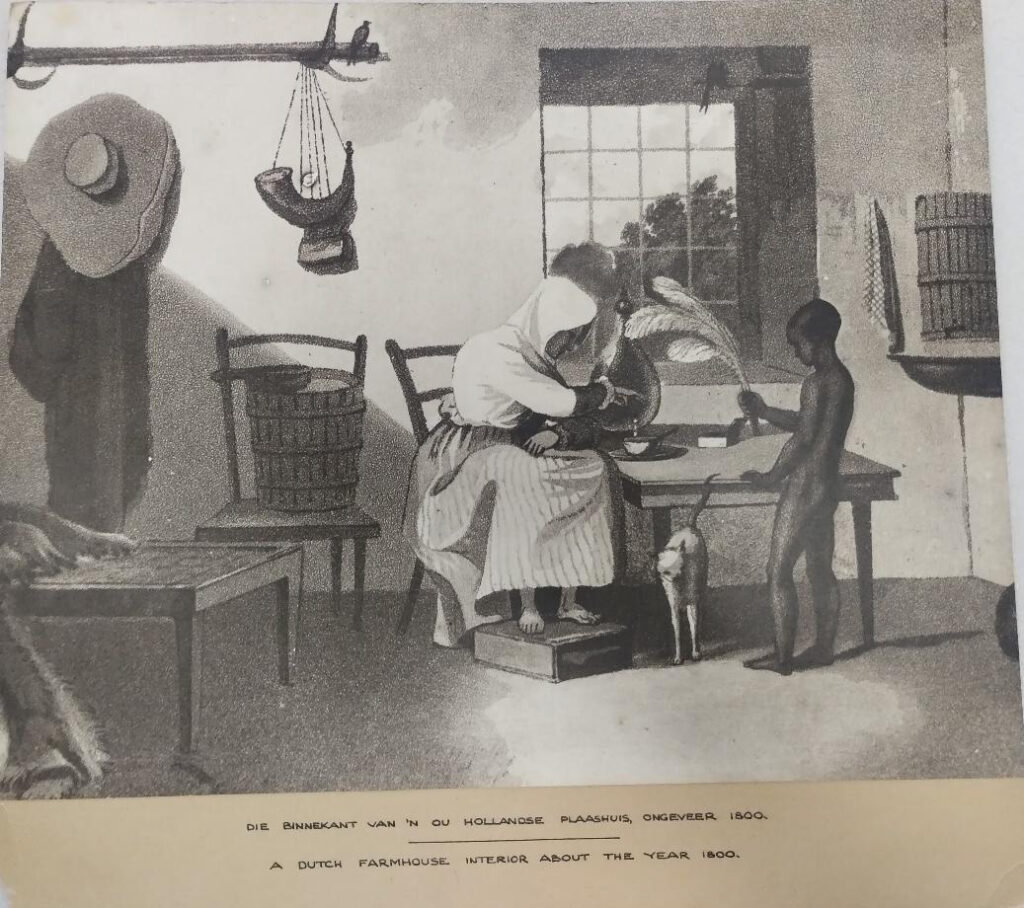
Print in the DNMCH collection with no provenance, titled “A Dutch farmhouse interior about the year 1800”.
Towards decolonising museum practice in South Africa
South African heritage institutions continue to work towards transformation of museum practices. Museums now approach cataloguing not just as a technical activity but rather as an ethical action that has serious implications for how different communities understand their own histories (Coombes 2003). This recognition has generated concrete initiatives aimed at recovering lost identities and restoring contextual meaning to visual collections, which have been impoverished by historical anonymity.
Digitisation has been a key enabling technology in this effort. By making images accessible beyond the physical archive, digital platforms create opportunities for community members, descendants, and researchers to identify individuals who remain nameless in institutional records. Projects such as Archive Africa, established in 2020, demonstrate the potential of digital tools to bridge the gap between institutional archives and community knowledge systems that might be able to populate those archives with names and stories (Dazed MENA 2025). Oral history recording has played a comparably important role, with local institutions, including the Centre for Popular Memory, South African History Archive, Lwandle Migrant Labour Museum, and District Six Museum, developing methodologies to connect photographed faces to living memories (Archive and Public Culture Research Initiative 2013).
At DNMCH, sustained inventory and documentation work continues to improve access to and contextual understanding of the photographic collections. This work is ongoing and its outcomes are necessarily uneven. Some photographs will eventually be connected to names and stories, while others may remain permanently unidentified. The recognition of this irreducible uncertainty is itself a meaningful ethical position. Rather than projecting a false confidence in the completeness or objectivity of archival knowledge, acknowledging the gaps and making them visible rather than concealing them, constitutes a form of accountability to the past and to the communities whose ancestors appear in these collections.
Decolonial archival theory, drawing on the work of scholars such as Mbembe (2002), Trouillot (1995), and others working within the tradition of refiguring the archive, emphasise that the goal of decolonising heritage practice is not to recover a comprehensive and authoritative account of the past. Rather, it is to transform the conditions under which the past is encountered, interpreted, and used to replace inherited frameworks of colonial knowledge with more equitable, inclusive, and dialogic approaches to heritage. Naming is part of this project, as is the honest acknowledgement of what can or cannot be known.
Conclusion
The unnamed photographs archived in South African museums represent one of the tangible legacies of the documentation systems through which colonial and apartheid governance was sustained. The DNMCH, like many similar institutions, has preserved a vast visual record of African life over more than a century. Yet that record is systematically incomplete in ways that reflect the priorities of those people who produced it rather than the humanity of those people it depicts.
When researchers engage with these collections, they encounter both historical insight and ethical discomfort. The archives present faces without names, bodies without biographies, images without the contextual information that would allow them to be connected to descendants or to the communities from which they were drawn. This is not simply an administrative problem. It is a reminder of the ongoing consequences of unequal knowledge production and a reminder that the preservation of heritage does not automatically constitute the preservation of justice.
The path forward requires more than technical improvement to cataloguing systems, although better documentation practice is certainly necessary. It requires a commitment to the kind of critical, dialogic, and community-engaged work that decolonising theory demands, naming the unnamed where that is still possible, creating space for community voices and oral traditions to supplement and correct institutional records, and being honest, in the absence of that possibility, about what has been irretrievably lost. The faces in these photographs deserve to be more than illustrations of history. They deserve to be named and recognised participants.
References
Archive and Public Culture Research Initiative. (2013). Oral histories and archiving memories in South Africa. University of Cape Town. https://humanities.uct.ac.za/apc/oral-histories-and-archiving-memories-south-africa
Basu, P. (2025). Voicing silences in the colonial photographic archive. Visual Anthropology Review 41, e70007.
Pass law. (2024). In Encyclopaedia Britannica. https://www.britannica.com/topic/pass-law
Coombes, A. E. (2003). History After Apartheid: Visual Culture and Public Memory in South Africa. Durham: Duke University Press.
Dazed MENA. (2025, March 7). The online platform decolonising the African archival narrative. Dazed MENA. https://www.dazed.me/art-photography/the-online-platform-decolonising-the-african-archival-narrative
De Klerk, M. (2015). Establishing visitor interaction between research, education and exhibition in the DITSONG: National Museum of Cultural History, Unpublished MInt(Prof) Mini Dissertation, University of Pretoria.
Digital Benin. (n.d.). Approaching colonial photographs with care. https://digitalbenin.org/documentation/approaching-colonial-photographs-with-care
DITSONG: Museums of South Africa. (n.d.). History of the National Museum of Cultural History. DITSONG: Museums of South Africa. https://www.ditsong.org.za
Hamilton, C., Harris, V., Taylor, J., et al. (Eds.). (2002). Refiguring the Archive. Dordrecht: Kluwer Academic Publishers.
Hayes, P. (2010). The Colonising Camera: Photographs in the Making of Namibian History. Cleveland: Ohio University Press.
Mbembe, A. (2002). The power of the archive and its limits. In C. Hamilton, V. et al. (Eds.), Refiguring the Archive (pp. 19–26). Dordrecht: Kluwer Academic Publishers.
Newbury, D. (2009). Defiant Images: Photography and Apartheid South Africa. University Park: Pennsylvania State University Press.
Rizzo, L. (2019). Photography and History in Colonial Southern Africa: Ambivalent Pictures. New York: Routledge.
South African History Online. (2019). Pass laws in South Africa 1800–1994. SA History Online. https://sahistory.org.za/article/pass-laws-south-africa-1800-1994.
Trouillot, M.-R. (1995). Silencing the Past: Power and the Production of History. Boston: Beacon Press.