A NEW BAT SPECIES NAMED IN HONOUR OF I.L. ‘NAAS’ RAUTENBACH (1942-2024)
By: Teresa Kearney – Curator: Vertebrate Department, Small Mammals, DITSONG: National Museum of Natural History (DNMNH)
The introduction of DNA sequencing has provided information indicating that patterns of relatedness previously based on morphology did not identify all vertebrate species. A recent paper [link] reports just how widespread these hidden or cryptic species are among vertebrates that were previously described based on morphology only. A new bat species, Afronycteris rautenbachi, was recently described in the journal Zootaxa (link). Although DNA sequences were key to the identification of its difference relative to other known species, this new species does have a morphological character that for years created uncertainty regarding the classification of bats exhibiting this feature. This feature is recognized in the common name given to this new species – Kruger tail-gland bat. Besides being different from other species in its DNA and having a pair of glands on the tail membrane, the published description also details other differences in the ear, skull and bacula morphology. The holotype of the new species, which paraphrasing the description given in the glossary for the Zoological Nomenclature Code (The Code Online | International Commission on Zoological Nomenclature), is the single specimen designated as the name-bearing type when the taxon is established, was collected in the northern part of the Kruger National Park, in the Makuleka Contract Park in a region known as Pafuri.
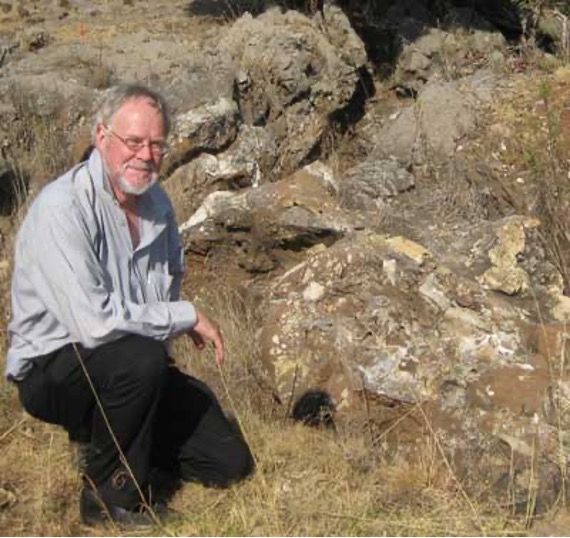
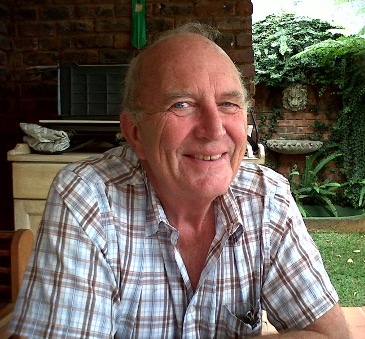
This new species was named in honour of Dr Ignatius Lourens (Naas) Rautenbach, who worked at what was then the Transvaal Museum (now DITSONG: National Museum of Natural History) from 1968 until he retired in 2001. During his tenure, he served as Curator of Mammals, later Head of the Department of Mammals, and ultimately Director of the Museum. In an article on the future of the museum Dr Rautenbach as Director Designate indicated that scientific pursuit is the capacity for “intelligent observation and informed interpretation”. This he certainly undertook through extensive collecting over many years, which made an important contribution to the Museum’s mammal collection. He further demonstrated this through his research and publications based on these collections, often undertaken with collaborators who’ve remained good friends. There is also a link between the holotype locality and Dr Rautenbach, given the years of fieldwork and research, in particular on bats, he and his collaborators did in the Pafuri region of the Kruger National Park.
Collections in natural history museums represent biodiversity across the times and areas in which they were collected. These tangible records provide baseline information for a myriad of uses including conservation assessments, spatial planning and diverse areas of research. The long-term preservation of specimens means research techniques may be used that did not exist at the time the specimens were collected, and they will hopefully still be available in years to come for use with techniques that are still to be developed. As records of the time in which they were collected, the importance of maintaining continuity in adding specimens to collections was well understood by Dr A. J. Rautenbach, who left an important legacy of specimens from across southern Africa and for different types of mammals. His PhD fieldwork between 1973 and 1977 resulted not only in numerous specimens (over 6000), but also the book Mammals of the Transvaal published in 1982 that recorded which species occurred where, together with ecological and behavioural information.
Fieldwork for specimen collection in museum collections and scientific research is rarely conducted in isolation, and collaborations, working together with others, is an efficient way to combine different types of expertise to achieve the outcomes. Dr Rautenbach’s fieldwork and specimen collection were often conducted with the assistance of other staff in the Mammal Section, including the Preparators S. Rantlhakwa and S. Mothlasedi, and Dr N.J. Dippenaar, when he was an Associate Curator in the section (see https://journals.co.za/doi/abs/10.10520/AJA00411752_118). Assistance also came from Prof G. Bronner while he was a post-graduate student in the section before he later assumed curatorship when Dr Rautenbach became the Director.
Dr Rautenbach’s publications indicate the numerous collaborations he also had with researchers from a diverse range of other organisations. Usually these were based on fieldwork and collection / survey of mammals in specific areas. Dr Rautenbach served as a principal collector for South Africa as part of ‘The Smithsonian Institution African Mammal Project (1961-1972)’ (see https://repository.si.edu/bitstreams/bd3e26ce-fe0b-4f26-86bc-3933298f4806/download). In the late 1970s and early 1980s BSc honours mammalogy students from the University of Pretoria were taught field techniques on trips with Dr Rautenbach and Prof Jan Nel from the Mammal Research Institute at the University of Pretoria. Not only were these important practical teaching opportunities, but they also resulted over different years in specimen collecting and species publications for Ithala Game Reserve in KwaZulu-Natal and Cederberg in the Western Cape (see Mammal diversity and ecology in the Cedarberg Wilderness Area, Cape Province). Other work on small mammals together with Prof Nel took them from the Kalahari in the Northern Cape to the Kammanassie Mountains and De Hoop in the Western Cape, the latter involving work on bats at a cave in the reserve.

Long term collaborations sometimes lead to good friendships, which appears to have been the case with many of the collaborators Dr Rautenbach had. I gather they appreciated his good sense of mischievous humour, his generous hospitality, and great cooking. In the 1980s and 1990s Dr Rautenbach’s collaborations with the American, Dr Duane Schlitter (Carnegie Museum of Natural History, see 2018 Jackson Award – Duane A. Schlitter | American Society of Mammalogists), and the Canadian, Prof M.B. (Brock) Fenton (currently Western University, see Prof. Brock Fenton | The Royal Society of Canada) were not only highly productive in their research output, but he and his supportive family (wife Kobie, daughter Annalene, and son Lourens) also became good friends with them and their families. During this time most of their research was focused on bats in the Pafuri region of the Kruger National Park. Not only did they provide many of the first records for the rich bat diversity in this area (see http://koedoe.co.za/index.php/koedoe/article/view/537), but they also investigated differences in their behaviour in relation to roosting, foraging/habitat use, diet and echolocation. Dr Rautenbach also expanded these collaborations to involve staff from the bird section at the Museum, including Allen Kemp, who joined the fieldwork at Pafuri to investigate the predation on bats by African goshawks (see http://koedoe.co.za/index.php/koedoe/article/view/437). And, then he brought in Prof Clark Scholtz, an entomologist from Pretoria University, to assist in correlating arthropod, bat and bird predator activity (see http://koedoe.co.za/index.php/koedoe/article/view/486). These successful field trips to Pafuri were largely due to the extraordinary talent Dr Rautenbach had in the planning and day-to-day management for such undertakings.
While observations of morphological differences had primarily been the means for distinguishing taxa, at the Museum Dr Rautenbach adopted new techniques that were being developed for the analysis of relatedness. He supported a laboratory within the Mammal Department, and together with Dr Schlitter and other collaborators they karyotyped / documented chromosomes (see http://koedoe.co.za/index.php/koedoe/article/view/377), and ran protein electrophoresis analyses (a forerunner to DNA sequencing that investigates protein differences) on the small mammals they were catching.

Photography was a serious interest of Dr Rautenbach’s. His daughter, Annalene, recalls it started with imaging specimens he caught for the Smithsonian Institution African Mammal Project. His images of bats were included in earlier editions of the Stewart’s mammal guide books. He continued to share this interest with her and his wife into his retirement. It was also part of the friendship with Prof Fenton, competing in the way good friends can, to get the best bat and wildlife images.
Dr Rautenbach also provided post-graduate and early career assistance to many students. Among those who benefited were Profs Peter Taylor (University of the Free State) and Gary Bronner (University of Cape Town), and the author, who was generously provided an NRF bursary and internship at the Museum for her masters. Prof Meester, who had been a Curator in the Mammal Section and was later based at the university in KwaZulu-Natal, supervised all of us, including Dr Rautenbach. Dr Rautenbach contributed his extensive knowledge on mammals, together with other co-authors, to an important text Prof Meester published in 1986, Classification of Southern African Mammals. Embracing changes that computers were bringing Dr Rautenbach also published with co-authors, Dr Pierre Swanepoel (Amathole Museum, Qonce) and Dr Ray Smithers (Mammal Research Institute, University of Pretoria), a mammal checklist and numbering system for the extant mammals in southern Africa that could be used in the first electronic data systems being used for the specimen records.
While the information above does not represent a complete record of Dr Rautenbach’s collaborators or publications, the examples were selected to highlight the depth and breadth of his collecting fieldwork, collaborations, and research. It feels remiss though, to not also mention L.E.O. Braack, G. de Graaff, and U. de V. Pienaar from the South African National Parks Board, with whom he also spent time in the Kruger National Park and published with (see New distributional records of Bats for the Republic of South Africa, with special reference to the Kruger National Park | Rautenbach | Koedoe and Records of seven small mammal species (Insectivora, Chiroptera) new to the Kruger National Park | Rautenbach | Koedoe).
I know less about his work as Director of the Museum, having joined the Museum after he retired. Although I’m aware as Director Dr Rautenbach was part of the management team that oversaw the reintegration of the National Cultural History Museum with the natural history Transvaal Museum (having previously separated in 1964) and the inclusion of the Military History Museum (Johannesburg) to form a single entity the Northern Flagship Institution, which today is the DITSONG: Museums of South Africa. Staff management styles and high-level organizational decisions are often fraught with detractors and supporters, and Dr Rautenbach seems to have had both. But there is no question about his immense contribution to our knowledge of southern African mammals, in particular bats, in both the collections and research he left, which is recognized in naming the new bat species after him (link).