THAUMA: HOW MUSEUMS REMEMBER THEMSELVES
By: David Rilley-Harris, Curator, DITSONG: National Museum of Military History (DNMMH)

Thauma – a way to another world.
(Picture: DITSONG: National Museum of Military History. The Rand Regiments Memorial).
If you have ever paused before an object in a museum and felt an unexpected, almost hypnotic interest in it, then you have experienced thauma. The object may not stand out in any immediately obvious way, but as you stare at it the world around you blurs away, and there is nothing but you and a swirling feeling that you are experiencing a different world. Thauma is typically defined as wonder or awe with a consequential inspiration to understand more of the world. It defines museums. Over time, museums have served many purposes, but in doing so, they can lose sight of their true power and purpose. Museums are halls of artefacts, each with the power of thauma, waiting for the visitor who will experience them in that way – being inspired to understand more and to feel more connected to their world. Aristotle said, “through wonder (thaumazein; 𝜃𝛼𝜐𝜇𝜁𝜀𝜄𝜈), men both now and at first began to philosophise”.
Objects that incite thauma in a museum visitor are not always those that appear obviously interesting. They do not have to be rare, beautiful, or immediately surprising in any way. What they must possess is a sense of mystery. The mystery in artefacts may pose a challenge for historians or archaeologists, but it is the very substance – the meat – of museums. Academics use museums to study artefacts for what the mysteries reveal, but they do that in museums because the public want to enjoy the mystery itself. The visitor may be inspired to learn more about the artefact, but the true purpose of thauma in a museum is to provide the visitor with permission to be a part of a wider world, and to inspire them to swim in the magical world of the unknown. In this way, museums are not learning institutions like schools or universities, but inspiration and inclusivity institutions that can build respect for education rather than an obligation to it.
The thauma comes from the object itself and from the visitor’s imagination. It can be hidden behind an overly educational approach to museum presentation. Similarly, many museums are adding gimmicks to museum displays making them loud and alive clouding the quiet and still magic of a simple artefact sitting and waiting to be noticed. Applications of technology like virtual reality are said to create a more immersive experience with the museum displays, but the immersion is superficial and drowns out the truly immersive connection that a visitor can experience with something which is inside of themselves.
The museum experience should feel like a treasure hunt – offering just enough information to spark curiosity, not to instruct, but to inspire a joyful desire to learn and connect. In Museology, a distinction is made between informational displays, which provide factual labels and context about an artefact, and affective displays, which aim to evoke an emotional response from the visitor. Yet, neither fully captures the power of thauma. The information displayed should be just enough to get a visitor’s mind started in roughly the right direction, and the emotional effect should come only from the object and the visitors themselves. Too much information makes the display too noisy and daunting. Too much effort drawing attention to the object makes it feel less personal to each visitor. In every museum, a visitor should be stopped in their tracks by one or two artefacts, while other visitors may stroll right past those same objects to find themselves stopped in their tracks by entirely different ones.
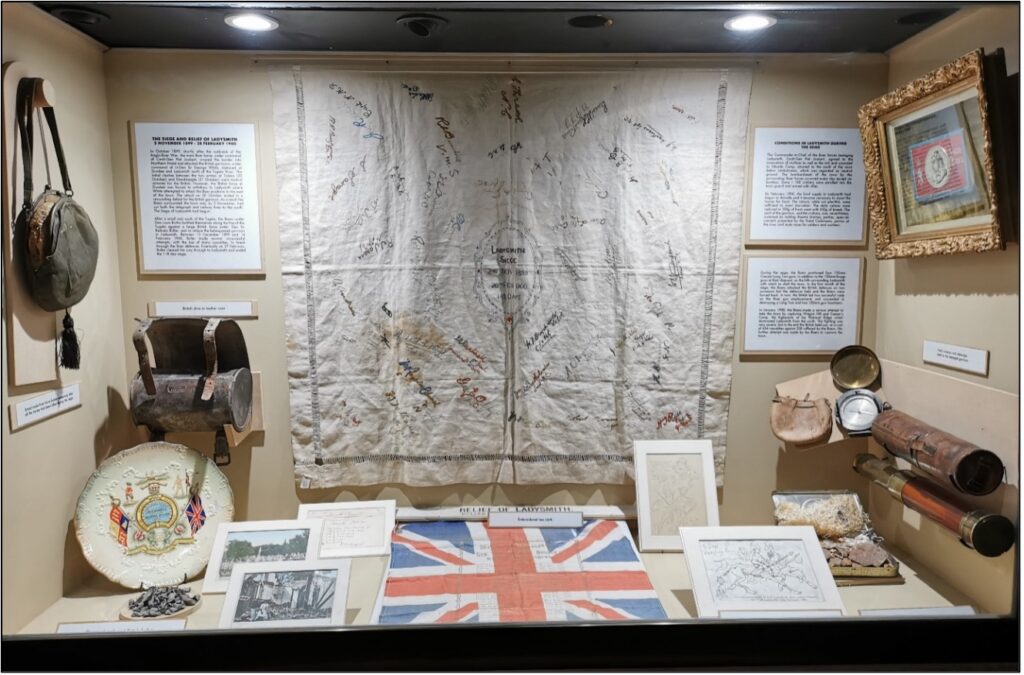
A display on the Siege of Ladysmith.
(Picture: DITSONG: National Museum of Military History).
The display pictured above is full of potential thauma. Most notably, is the purse hanging on the left labelled: “Bread made from horse fodder remaining after all the horses had been killed during the siege”. There is no explanation as to why the fodder is in a purse or why some of it appears to have been picked at and presumably eaten by a women stuck in the besieged town. One can assume that the horses had been killed for food. The desperation caused by the siege can be felt as can the liberation of the town which spared the owner from having to continue eating the fodder. While an academic might have a specific reason to study the purse, a museum visitor already has all the information they need at hand. The siege was real. The hunger was real. That could have been my purse. When a visitor notices that one particular item and pauses to look at it, the artefact becomes theirs alone – like a quiet personal secret. For that brief moment, they were in Ladysmith during the siege.
There is in people a natural yearning for thauma. It can be seen in the most common question asked by children on school tours to the DITSONG: National Museum of Military History – “Is it real?”. In my experience guiding school groups, I first thought that they were asking if it was a replica, but I soon noticed that the occasional replica in the museum did not dissuade them at all. They are asking if people experienced something around the artefact. They were comfortably interested in replicas that brought a vision of people living in a different time. They were less interested in real artefacts which were donated to the museum having seen little or no action in their time. Most museum visitors want to hear little more than a human story attached to the artefacts. The happiest visitors will confess their limited knowledge of the history before excitedly explaining the artefact to the tour guide. They do not care if they are accurate but simply want to indulge in the human experience they are emotionally witnessing – the thauma.
As museums try to guide, educate, or profit by putting on a show, they distract from potential thauma. It is the thauma that makes museums distinct from schools, universities, political rallies, or theme parks. Thauma is difficult to measure in its occurrence and in its long-lived impact on a person. As a result, museums rely on other methods of justifying their expense, sometimes at a cost to thauma and to the museum itself. There are many museum displays which would benefit from nothing more than the removal of information. There is not a museum visitor in the world today who is incapable of quickly bringing up information boards, videos, or political opinions on their cell phones if they wish to explore the artefact more. The very purpose of a museum is to inspire people to care and explore on their own. The museum visitor should be overwhelmed only by their own imagination. All the work a museum undertakes should serve that purpose. Perhaps the clearest sign that a museum is fulfilling its mission, is a smudge of a handprint left on the display glass.