TRACING THE HISTORIC ROUTE: HATHERLEY FARM (ZWARTKOPPIES) TO EERSTE FABRIEKE- MAMELODI
By: Abraham Mohale: Junior Curator, DITSONG: National Museum of Military History

Figure 1, An aerial view of Mamelodi Township (Source: Wikipedia).
Nestled at the base and lower slopes of the Magaliesberg mountain range (Thaba ya Mogale), between the Pienaars River (Noka ya Moretele), lies Mamelodi Township. Situated approximately 20 kilometres east of central Pretoria, the township was originally established on the farm Vlakfontein. Initially known by the same name, it was renamed Mamelodi in the 1950s, following its purchase by the City Council of Pretoria on 30 October 1945 from C. Jansen. The purpose of the acquisition was to create a designated residential area for black people. Vlakfontein was officially proclaimed a black township in terms of Government Notice No. 182, under the Group Areas Act of 1953. Mamelodi exemplifies the typical apartheid-era township, designed to relocate black communities away from urban centres. Like many such settlements, Mamelodi expanded to accommodate people forcibly removed from areas such as Riverside, Eastwood and Lady Selborne in line with the provisions of the Group Areas Act of 1950. The growth of Mamelodi was halted in 1968 when the government imposed a freeze on new housing developments for black South Africans in urban areas. This restriction remained in place until it was reversed in 1978.
There is overwhelming evidence of human settlement in the area during the Early Stone Age, well before the 1400s. The South Ndebele people of the Manala under Kgosi Musi were the first Nguni-speaking people to settle in the region. They relied on crop growing and livestock farming. According to Aubrey Mogase in his book Mamelodi: Reflections of a Lifetime (p. 12, under the heading “Mamelodi: The Foundation”), the Nguni produced stone tools from rocks sourced from the Magaliesberg Mountains. Mogase further notes evidence of habitation by black communities along the Magaliesberg mountain range around the 1800s. With the onset of the Anglo-Boer War (1899–1902), some historians contend that the conflict extended into the Mamelodi area. The Mogale Mountains played a pivotal role, particularly in the positioning of Boer army artillery. In summary, the Anglo-Boer War did impact the Mamelodi area, both historically and military.
It seems that the earliest settlers in Mamelodi were herders and farmers, who appear to have come from Arcadia, where many had previously lived in temporary backyard shacks on the properties of their employers. Some may have found employment at Sammy Marks’ brewing distillery at Eerste Fabrieken, established in 1883. At the time, land was abundant, and settlers were able to secure sites and build their own mud houses. Keeping domestic animals became the norm for inhabitants as land, as well grazing were abundant. Eerste Fabrieken operated for 38 years, with the exception of a three-year interruption during the war, when all activities came to a halt. In 1887 a railway line to Delagoa Bay (now Maputo) was constructed, providing much needed logistical support. Initially, the railway line was used to transport supplies to Eerste Fabrieken, but it later played a crucial role in aiding people to escape eastward, as well as those pursuing enemy forces. Notably, Winston Churchill is believed to have escaped captivity via the Vlakfontein railway line toward Delagoa Bay. Similarly, President Paul Kruger used the same route to establish a seat of government in Machadodorp, located in the former Eastern Transvaal, presently known as Mpumalanga Province.
Top of Form
Research indicates that there was a strong bond between black communities and President Paul Kruger’s government. Mogase in his book, references the Lekhuleni clan, who settled on the farm, Morabane – present-day Mahube Valley Extension 1 in Mamelodi East. Today, it is difficult to determine precisely how many residential areas (houses) exist around Mamelodi. The township has expanded significantly to the east. After 1994, Nellmapius township was extended. It was named after a Hungarian Jew, who was Sammy Marks’ business partner at Eerste Fabrieken. This period also saw a substantial increase in informal settlements.
The first factories in the Transvaal Republic (South African Republic)
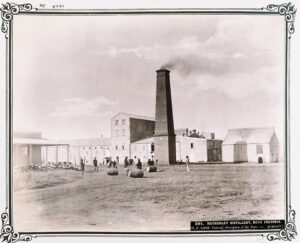
Figure 2. The Eerste Fabrieken Hatherley Distillery was opened on 6 June 1883 by President Paul Kruger (Photo: Gross photo-album, DITSONG: National Museum of Cultural History).
To establish this distillery Sammy Marks entered into a business partnership with Alouis Hugo Nellmapius, a Hungarian Jew who held several concessions but lacked the financial resources to develop them. He invited Sammy Marks into the partnership. President Paul Kruger officially opened the factory on 6 June 1883; it was later renamed The Eerste Fabrieken Hatherly Distillery Limited. Over time several factories were established at Eerste Fabrieken. Initially focussed on brewing, Sammy soon realised that it was costly to order glass bottles from England. As a result, he founded the Hatherley Glass Factory. He also started a jam and preserves company after his fruit farm became successful, Additionally, he registered the Imperial Cold Storage Company, established a brick factory, and founded Pretoria Portland Cement (PPC). President Paul Kruger referred to these factories as Die Volkshoop – meaning The Peoples Hope – highlighting their importance to the local economy. Today, however, no physical traces of Marks’ and Nellmapius’ factories remain. The name Eerste Fabrieken survives only as a train station, primarily used by commuters from Mamelodi.
Dr Motsane Seabela, in her master’s dissertation, offers a detailed analysis and historical account of black servants and communities at Zwartkoppies Farm. She went further to explain the influence and significant role and impact of black labourers, emphasising how these so-called native communities contributed immensely to the development of Sammy Marks’ lavish Victorian estate and broader business empire. Her research addresses issues such as child labour and forced removals, detailing how colonial and later apartheid-era laws enabled violations of black people’s human rights. Dr Seabela traces the displacement of indigenous black communities from their original settlements.
Through a series of interviews, Dr Seabela spoke with Sana Maselatole Mabogoane, the daughter of the great-grandfather Kutumela Molefi. Mabogoane recounted that when the Sammy Marks family arrived at Zwartkoppies Farm, they found her great-great-grandfather already living there. The place was then known as Ga-Morabane. Although Mabogoane said she was not sure if Ga-Morabane was named after her ancestor, she was sure that the man encountered by the Marks family was the father of her great-grandfather, Kutumela Molefi. Seabela’s oral research and interviews, showed without a shadow of doubt, that black African communities occupied the land long before the arrival of Europeans settlers. These communities were offered small pieces of land to build houses in exchange for their work and service on the farm – a forced agreement imposed on them. The Molefi family, like many other black families found themselves living on white-owned land not by choice, but as a result of settler encroachment on their ancestral territory. Other families – including the Kwenda, the Magagula, Bokaba and Bafedi – were similarly displaced and left in a kind of “no man’s land.” It was only with the later establishment of Mamelodi township that many of these families found some relief and relocated there.Top of Form
Bottom of Form
The land claim process and the and proof of Originally Dispossessed Individuals (ODI) have traced the historical pathways and land routes of the Hatherley, Nellmapius and Vlakfontein farms – areas that today form part of Mamelodi. The verification and genealogical research conducted during the land claim process for the Hatherley Farm have confirmed that the descendants of the original occupants are indeed the rightful claimants.
Balachandran (2016) asserts that “as long as these tangible sites and objects exist, they serve as evidence that people were here – that their histories, their memories and their past mattered – and that they are still here, still matter and will continue to matter in the future.“ In the concluding chapter of her work Representation and Photography of Un-silencing Histories of Black Servants at Zwartkoppies, Dr Seabela tells a story of what she found in the Sammy Marks Museum archives. After examining the photographs and questioning them, she felt like she was representing the voices that were silenced and rendered invisible. Like creating a tapestry, the interrogation of this archive felt like a process of weaving by carefully pulling every strand to extract any possible history and meaning. She further describes photographs as evidence and a tool to dismantle their stationary form so to enable them to speak for those who were denied the opportunity to tell their own stories, the oppressed and the dispossessed communities. Seabela’s approach echoes the arguments of O’Connell (2012: 16-17) and Rose (2003: 11), who contend that photographs are never simple representations, on the contrary they convey sets of meanings that are embedded with complex social, political and economic meanings. By unearthing and disrupting the comfort created by those in power, she uses the archive as a means to empower the disempowered, even in their absence.
The footprints and pathways of Hatherley farm and Mamelodi township
Sammy Marks (1844-1920) and Solomon Mahlangu (1956-1979): A Tale of two legacies
Using comparisons and differences of these two great personalities, both Sammy Marks and Solomon Mahlangu stand as towering figures in South African history — each representing vastly different eras, values, and historical narratives. Sammy Marks was a Lithuanian-born Jewish immigrant who rose to prominence during the colonial and industrial age of the late 19th and early 20th centuries. As a self-made businessman, he became a pioneering entrepreneur and industrialist, playing a central role in shaping South Africa’s early economy. He was a Victorian influencer, deeply embedded in both Boer and British power politics.
He was the founder of several major enterprises, including:
- Hatherley Glass Factory, later known as Consol Glass
- Union Steel Corporation, later transformed into ISCOR (now ArcelorMittal)
- South African United Breweries, which evolved into South African Breweries (SAB)
- Coal mining ventures around the Vaal River
- Early hydroelectric power projects and mechanized agriculture
His business ventures placed him alongside powerful figures such as Cecil John Rhodes, with whom he collaborated in the diamond mining sector through his African European Investment Company. For his industrial achievements, he was granted a seat in the Senate of the Union of South Africa following the Peace Treaty of Vereeniging (1902).
Marks’ Victorian mansion at Zwartkoppies, preserved as a heritage site under the DITSONG: Museums of South Africa, remains a testament to his wealth and influence. According to his son-in-law, Neil Maisels, the house had “the makings of a remarkable museum.” Today, it offers a window into the lifestyle of the upper-class elite of the time, complete with original Edwardian furnishings, fine glassware, silverware, and porcelain. His legacy can be visibly traced at Zwartkoppies House and at Eerste Fabrieken in Mamelodi.
In stark contrast, Solomon Mahlangu (born and bred in Mamelodi) was a South African freedom fighter, a struggle activist and operative of Umkhonto we Sizwe, the military wing of the African National Congress (ANC). At just 22 years old, Mahlangu was arrested after an armed encounter in Goch Street in Johannesburg, where he had returned from exile to support the liberation movement and help his fellow comrades with ammunition. On 6 April 1979, he was executed by the apartheid regime, becoming a martyr of the liberation struggle. His final words before he faced the gallows remain etched in South Africa’s collective memory: “My blood will nourish the tree that will bear the fruits of freedom. Mom don’t cry for me, but tell my people that I love them. They must continue the fight.”
Posthumously, Solomon Mahlangu was honoured for his self-less dedication to the evolutionary struggle and for his courage and sacrifice:
- The Solomon Mahlangu Freedom College (SOMAFCO) in Mamelodi bears his name
- A residence hall at Sokoine University of Agriculture in Tanzania is named after him
- Solomon Mahlangu House at Wits University
- The renaming of Jan Smuts Hall at Rhodes University to Solomon Mahlangu House
- Hans Strijdom Drive, a main road through Mamelodi and Pretoria east, was renamed Solomon Mahlangu Drive
- A statue at the entrance to Mamelodi West commemorates his sacrifice
In 2005, he was posthumously awarded The Order of Mendi for Bravery by President Nelson Mandela, in recognition of his unwavering dedication to the cause of freedom and democracy.
Conclusion
Indeed, there are clear historical traces and connections linking the Hatherley Farm of the Sammy Marks family to the black indigenous communities who resided there. These links extend through the system of migrant labour that fed into Zwartkoppies Farm and later into the industrial operations at Eerste Fabrieken in what is now Mamelodi. Embedded in this history are unresolved issues of land dispossessions and ownership legacies of colonial encroachment that shaped the forced movement and eventual concentration of black people in the segregated urban township of Mamelodi. The industrial expansion of surrounding areas such as Waltloo and Silverton, the naming of the streets in Mamelodi, and the establishment of Nellmapius – all carry the imprints of this complex historical narrative.
Sources
Seabela, M.G. Un-Silencing Histories of Black Servants at Zwartkoppies Farm: a transition from the Sammy Marks House to the Sammy Marks Museum. Dissertation (MSoSci), University of Pretoria, 2020.
Mendelsohn, R. Sammy Marks The Uncrowned King of the Transvaal. (David Philip, 1991).
Mogase, A. Mamelodi: Reflections of a lifetime. (Aubrey Michael Mogase, 2018).
South African History Online https//www.sahistory.org.za
https://en.wikipedia.org/wiki/Mamelodi