Decolonisation and Africanisation of Museums: A Curatorial Imperative
By: Abraham Mohale, Junior Curator, DITSONG National Museum of Military History
Introduction
Decolonisation is a complex, multifaceted process that involves the undoing of colonialism in its various forms; it can be political, economic, cultural, and psychological. Africanisation, on the other hand, is the cultural process of centring African values, knowledge, and perspectives. This article focuses on the psychological effects of colonialism and its implications, drawing on frameworks of decolonising the mind to liberate individuals from psycho-existential colonial complexes (Msila, 2017). Historically, decolonisation refers to the dismantling of colonial empires and achievements of sovereignty by colonised territories, particularly after the Second World War (‘Decolonization’, 2026). The term is also understood as an ongoing, active, and at times radical process of restoring indigenous worldviews, knowledge, and sovereignty (Babalola, 2023). Cultural and psychological liberation refer to the overturning of colonial mentalities, and the reclamation of language, culture, history, and the traditions that were erased or undermined by colonisers. It also includes confronting perspectives and narratives that promote the ideologies that privilege Western thought over indigenous systems.
Decolonisation of African museums involves dismantling colonial-era power structures, curatorial biases, and knowledge systems to return control, voices, local historical perspectives, restorative justice, artifacts, and African heritage items to African communities (Effiboley, 2019). Decolonisation and Africanisation of museums can thus be explained as a process of reclaiming cultural narratives and fostering repatriation of looted items; it represents the structural transformation of institutions from colonial repositories into spaces for authentic African heritage, agency, and regional identity (UNESCO ROSA, 2025).
Repatriation and Restitution
The International Council of Museums (ICOM) adopted repatriation and restitution as part of its core ethical professional practices, framing these actions as tools for the promotion of restorative justice and community healing (ICOM, 2026). This international protocol is executed in close alignment with conventions set forth by the United Nations Educational, Scientific and Cultural Organization (UNESCO), ensuring legal and diplomatic compliance when returning illicitly transferred cultural artifacts to their source communities (UNESCO, 2024; UNESCO ROSA, 2025).
Restructuring Representation
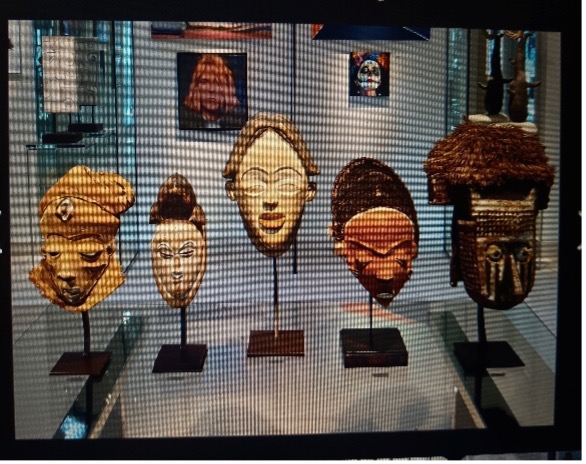
Museum practitioners must move away from portraying African cultures through a Western lens, which can reduce them to static ‘specimens’ or ‘primitive’ objects severed from their living communities (Lidchi, cited in Vawda, 2022; UNESCO, 2025). Historically, Western missionaries and colonial ethnographers were particularly prone to these practices, systematically renaming and framing sacred spiritual heritage objects as ‘uncivilised’, ‘demonic’, or backward to justify their extraction and replacement (Ngurumi & Kariuk, 2025). Restructuring representation can only be achieved with the active involvement of local communities, descendant groups, and indigenous experts who participate as co-curators in the decolonial interpretation of objects (Bacci, 2024). Museum curators and educators must proactively assist in revisiting narratives that highlight African historical creativity, complexity, and agency rather than focusing solely on colonial encounters and Eurocentric perspectives.
Epistemic justice is critical for achieving the contemporary museum transformation agenda and ensuring the structural recognition of previously secluded historical narratives; it is vital for closing existing representation gaps within our African museums (Mungwini, 2018; UNESCO, 2023). Museum practitioners must explicitly practice fairness in the production, sharing, and validation of knowledge to ensure that marginalised perspectives are not systematically disregarded or undervalued (Ndofirepi & Gwaravanda, 2026). Taking this collaborative step directly addresses historical testimonial and hermeneutical injustices where individuals and descendant communities were ethically wronged (Mutongoza, 2025). African storytellers, curators, and artists hold a distinct responsibility to challenge the long-standing dominance of Western knowledge systems by researching truthfully, validating indigenous knowledge networks, and permanently preserving oral histories inside our national museums (Binter, 2024).
Decolonial Research and Africanisation
Decolonial research is an approach that fundamentally challenges Eurocentric ways of making and validating knowledge (Denscombe, 2024). It explicitly shifts power from outside researchers to local and marginalised communities, treating participants as active co-creators of knowledge rather than the mere subjects of study (Simpson, 2026). Core principles of decolonial research are to expose and fix the historical power imbalances between traditional Western institutions and colonised or marginalised groups. Valuing local knowledge is paramount, because by recognising and engaging locals, this treats indigenous stories, arts, displays, lived experiences, and cultural frameworks as valid, equal knowledge systems (Mangra, 2026).
Re-centring indigenous knowledge means moving away from text-based, Western-style curation, to incorporate oral traditions, performances, rituals, and living cultural practices (DEFSA, 2025). Inviting and collaborating directly with local and diaspora communities to shape exhibition narratives are vital parts of this process, ensuring that descendant groups have a definitive say in how their histories are told rather than relying on external expert perspectives. The most important task in our African museums is to redefine epistemes and language. Museum curators must endeavour to rewrite authoritative wall texts, challenge colonial taxonomies, and remove racist context from historical displays. In simple terms, institutions must desist from recreating and promoting “crime scenes” in museum displays under the guise of creating unique narratives, which only serves to continue promoting colonised contents (Solaro, 2026).

Case Study: DITSONG: National Museum of Military History
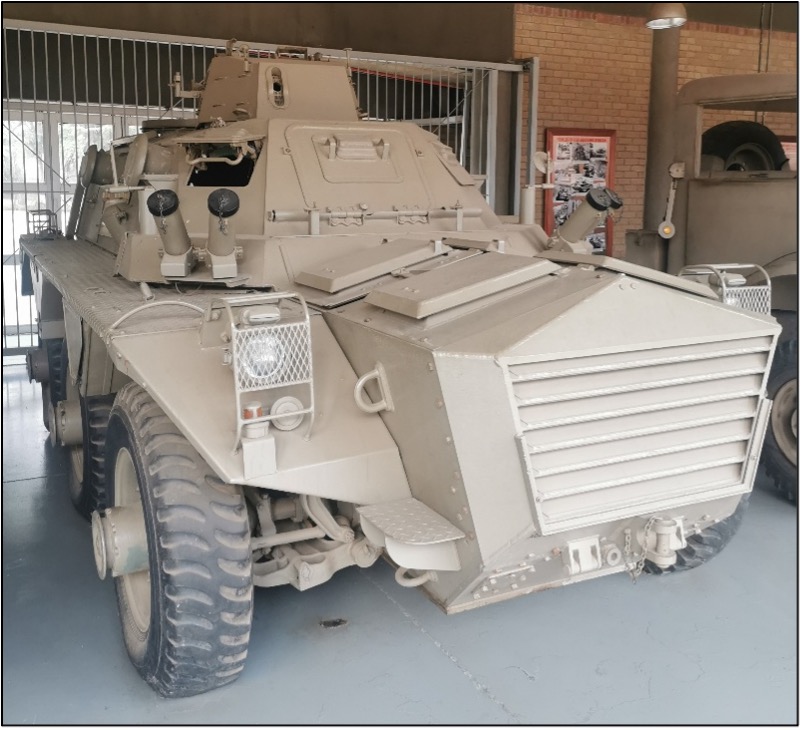
Using the DITSONG: National Museum of Military History as a focal case study, there remains a monumental task for modern curators to actively decolonise, transform, research, and recreate historical museum displays (Sinclair, 2026). It is vital to strategically fill existing educational gaps and acquire a more diverse range of heritage objects that accurately reflect the demographics of all South Africans, highlighting African indigenous warfare alongside conventional military history (SAHO, 2019).
While maintaining current Eurocentric displays for archival and educational context is valuable, curators must aggressively accelerate dedicated initiatives aimed at recovering neglected African military histories (Patrick, 2025). Curators hold a duty to produce, share, and validate plural knowledge systems, ensuring that public programmes do not mis portray African soldiers as mere passive tools of foreign colonial powers (Rilley-Harris, 2026). In South Africa’s participation in global conflicts like the two World Wars, black soldiers were systematically relegated to non-combatant, ceremonial, and marginalized roles.
A renewed, concerted effort must be made to highlight pre-colonial and early anti-colonial resistance battles from an authentic African perspective, evaluating combat strategies, cultural belief systems, and indigenous knowledge frameworks (Sinclair, 2024). Because colonisation operated as a systematic project designed to control populations psychologically, economically, and politically, dismantling its legacy demands an intellectual audit—a critical evaluation of inherited colonial ideas to challenge Eurocentric standards in favour of absolute equity and inclusion.
Restorative Justice, Healing, and Dialogue
This curatorial task may be emotional and difficult, yet all stakeholders, role players, and museum practitioners must use cultural spaces as a platform for finding each other, facilitating reconciliation, and fostering honest dialogue (Boafo, 2026). This intentional approach will help transform museums from passive repositories into active spaces for social justice; it aims to un-erase historical injustices and permanently affirm the dignity of African people.
Applying this framework will assist in achieving what is referred to as the “Five R’s” of restorative justice: relationship, respect, responsibility, repair, and reintegration (Conflict Centre, 2019). Decolonisation and Africanisation point out that at the heart of every restorative process is a deeply damaged relationship between the systemic entities that caused harm, the recipient of that harm, and the broader community in which the harm was felt.
One viable solution is the universal application of core restorative values: restoration, voluntarism, impartiality, safety, accessibility, and empowerment (Gius, 2024). A framework of institutional harm reduction aligns with each of these principles in a meaningful way and will go a long way in assisting this transformative process. Restorative justice as a transformation process will not achieve a fair balance of power in our museums if new developments and displays are not entirely inclusive. Without deep, structural inclusion, our operational objectives will fail. Restorative justice must remain an approach to institutional wrongdoing that focuses explicitly on repairing historical harm and promoting collective healing rather than solely penalising historical offenders (Pathways, 2022). Global CaseStudies: To see how these progressive policies are actively implemented globally, read the documented institutional frameworks compiled by international heritage consortiums (TheMuseumsLab, 2025).
Conclusion
Colonisation operated as a systematic historical, political, economic, and social project driven fundamentally by motives of wealth extraction, geopolitical dominance, and religious expansion. Rather than a purely structural takeover, it was introduced as a deeply rooted psychological ideology aimed at embedding specific propaganda narratives within the so-called ‘Third World’ (Msila, 2017). Unpacking this legacy requires comprehensive evaluation, institutional accountability, and independent critical thinking. Ultimately, it remains in our hands to collectively decolonise and structurally transform our heritage institutions (Effiboley, 2019).
This reclamation of narrative aligns with the vision of Patrice Lumumba, the former Prime Minister of the Democratic Republic of Congo, who famously stated from Thysville Prison: “The day will come when history speaks, but it will not be history which will be taught in Brussels, Paris, Washington or the United Nations. Africa will write its own history and in both north and south it will be a history of glory and dignity” (Lumumba,2026). In applying Lumumba’s core anti-colonial philosophies to modern curation, progressive museum frameworks advocate shifting away from static, storage-like colonial vaults toward dynamic community spaces for dialogue, transformation, and growth (Royal Museum for Central Africa, 2026). Finally, as the political philosopher Frantz Fanon noted, imperialism leaves behind structural and psychological “germs of rot” which we must clinically detect and remove not only from our land but from our minds as well (Denscombe, 2024).
References
Babalola, F. (2023, February 6). What is decolonisation? Foluke’s African Skies. Accessed at: https://folukeafrica.com/what-is-decolonisation/
Bacci, F. (2024). Reconceptualizing museum decolonization: A proposal for the repatriation of agency. Routledge Open Research, 3, 20.
Binter, J. (2024). Can museums become sites of epistemic justice? Paper presented at European Association of Social Anthropologists Conference, Barcelona. Accessed at: https://nomadit.co.uk/conference/117/paper/81147
Boafo, P.K. (2026). Museum as a space for healing? Towards reparative discomfort.The Heritage Management Organization. Accessed at: https://heritagemanagement.org/museum-as-a-space-for-healing-towards-reparative-discomfort/
Conflict Centre. (2019). The 5 Rs of Restorative Justice. The Conflict Centre. Accessed at: https://conflictcenter.org/the-5-rs-of-restorative-justice/
Denscombe, M. (2024). Decolonial research methodology: An assessment of the challenge to Western research methodology. International Journal of Social Research Methodology, 27(3), 311–325.
Decolonization. (2026). In Encyclopaedia Brittanica. Accessed at: https://www.britannica.com/ topic/decolonization
DEFSA. (2025). DESIGN+ disruptions, realities, futures conference proceedings. Design Education Forum of Southern Africa. Accessed at: https://www.defsa.org.za
Effiboley, E. P. (2019). Decolonizing African museums: Meanings and imperatives. Zaria Archaeology Papers 12: 34-54. Department of Archaeology and Heritage Studies, ABU, Zaria, Nigeria.
Gius, I. (2024). The shared principles of harm reduction and Restorative Justice. Why Me? Transforming Lives Through Restorative Justice. Accessed at: https://why-me.org/the-shared-principles-of-harm-reduction-and-restorative-justice/
ICOM. (2026). The revised ICOM code of ethics is officially adopted. International Council of Museums. Accessed at: https://icom.museum/en/news/the-revised-icom-code-of-ethics-is-officially-adopted/
Lumumba, P. (2026[1961]). Letter from Thysville Prison to Mrs. Lumumba. Patrice Lumumba (1925-1961). Marxists Internet Archive. Accessed at: https://www.marxists.org/subject/africa/lumumba/index.htm
Mangra, R. (2026). Decolonizing research methods: What they are and how to apply them. Quali-Fi Learn. Accessed at: https://quali-fi.com/learn/decolonizing-research
Msila, V. (2017). Decolonisation of the African mind and the university: The case of a South African university. Phronimon, 18, 1–17.
Mungwini, P. (2018). The question of epistemic justice: Polemics, contestations and dialogue. Phronimon, 19, 1–13.
Mutongoza, B.H. (2025). Epistemic justice, institutional transformation and the pursuit of a decolonised African academe. Interdisciplinary Journal of Sociality Studies, 7(1), 12–26.
Ndofirepi, A. P., & Gwaravanda, E. T. (2026). Epistemic (in)justice in African universities: A perspective of the politics of knowledge. Educational Review, 71(6), 1–14.
Ngurumi, A.W. & Kariuk, F. (2025). A postcolonial critique of African cultural heritage laws using notions of communitarianism and relationality under the concept of African Renaissance. International Journal of Cultural Property, 32(1), 105–123.
Pathways. (2022). About restorative practices: Shifting from blame to repairing harm. Pathways to Restorative Communities. Accessed at: https://www.pathways2rc.com/about-restorative-practices
Patrick, A. (2025). From apartheid to aviators: Military museum revamp tells SA’s full story. News24 South Africa, 2 November. Accessed at: https://news24.com/southafrica
Rilley-Harris, D. (2026). The military role of a new South Africa (1998-2000). DITSONG Museums of South Africa. Accessed at: https://ditsong.org.za/
Royal Museum for Central Africa. (2026). Podcast: Patrice Lumumba à travers sa dernière lettre. Africa Museum Tervuren Belgium. Accessed at: https://www.africamuseum.be/en/learn/ podcasts/tout-passe-sauf-le-passe/episode4
SAHO. (2019). South African National Museum of Military History. South African History Online Places. Accessed at: https://sahistory.org.za/place/south-african-national-museum-military-history
Simpson, M. (2026). Museums and restorative justice: Heritage, repatriation and cultural education. Museum International, 61(1-2), 121–129.
Sinclair, A. (2024). History of the Ditsong National Museum of Military History. The Heritage Portal. Accessed at: https://www.theheritageportal.co.za/article/history-ditsong-national-museum-military-history
Sinclair, A. (2026). Curating conflict: Johannesburg’s military history museum in a post-1994 context. Chai FM The War Room Broadcast Repository. Accessed at: https://ditsong.org.za/en/our-museums/ditsong-national-museum-of-military-history/
Solaro, L. (2026). Decolonization in action: Lessons from the Musée ethnographic de Genève. International Journal of Cultural Property, 33, e5.
TheMuseumsLab. (2025). Decolonising practices: Online platform and participatory pavilion. TheMuseumsLab CollabFund. Accessed at https://themuseumslab.org/decolonising-practices
UNESCO. (2023). Epistemic justice and the knowledge commons for lifelong and life wide learning. United Nations Educational, Scientific and Cultural Organization. Accessed at: https://www.unesco.org/en/articles/epistemic-justice-and-knowledge-commons-lifelong-and-lifewide-learning
UNESCO. (2024). Return and restitution under the aegis of the ICPRCP. United Nations Educational, Scientific and Cultural Organization. Accessed at: https://www.unesco.org/en/fight-illicit-trafficking/return-and-restitution-under-icprcp
UNESCO Regional Office for Southern Africa. (2025). Reframing the return and restitution of cultural property in Southern Africa as healing: A new bold step toward putting communities first. United Nations Educational, Scientific and Cultural Organization. Accessed at: https://www.unesco.org/en/articles/reframing-return-and-restitution-cultural-property-southern-africa-healing-new-bold-step-toward
Vawda, S. (2022). Decolonising museum practice in a postcolonial nation. Cultural Analysis, 20(2), 229–245.