DIFFERENCES BETWEEN DINOFELIS BARLOWI AND DINOFELIS PIVETEAUI: MORPHOLOGY, EVOLUTION, AND HABITATS
By: Lazarus Kgasi, Junior Curator, DITSONG: National Museum of Natural History
Dinofelis, an extinct genus of saber-toothed cats, is well-presented in South Africa’s fossil record. Its remains have been found at several key sites, including the Pliocene deposits at Langebaanweg in the Western Cape, and various Plio-Pleistocene sites such as Makapansgat (a World Heritage site in Limpopo) and in the Cradle of Humankind-World Heritage Site. Important fossil-bearing caves in the latter include Sterkfontein Site, Gladysvale, Cooper’s Cave, Motsetse, Bolt’s Farm cave system, Kromdraai, Legaga, Drimolen and Malapa. Some of these sites have produced remains of multiple Dinofelis species, among them D. barlowi, D. piveteaui, D. aronoki, D. werdelini and D. darti. The discoveries of D barlowi and D piveteaui in particular have provided valuable insights into the genus’ morphology and evolution in South Africa.
Dinofelis is regarded as a “false” or “near” saber-tooth cat, with characteristics of both saber-tooth cats (long canines) and more conventional cats (conical canines). It is believed to have had a body size intermediate between that of a leopard and a jaguar. Among the South African representatives, D. barlowi (figure 1) and D. piveteaui (figure 2) are the most extensive studied. They have significant morphological, ecological, and evolutionary characteristics that reflect their adaptations to various settings and prey strategies.
The species names commemorate key figures in palaeontology: D barlowi honours Mr Barlow, the manager of the Sterkfontein quarry where the first specimen was discovered, while D piveteaui is named after the French palaeontologist Jean Piveteau, who extensively researched and described the genus.

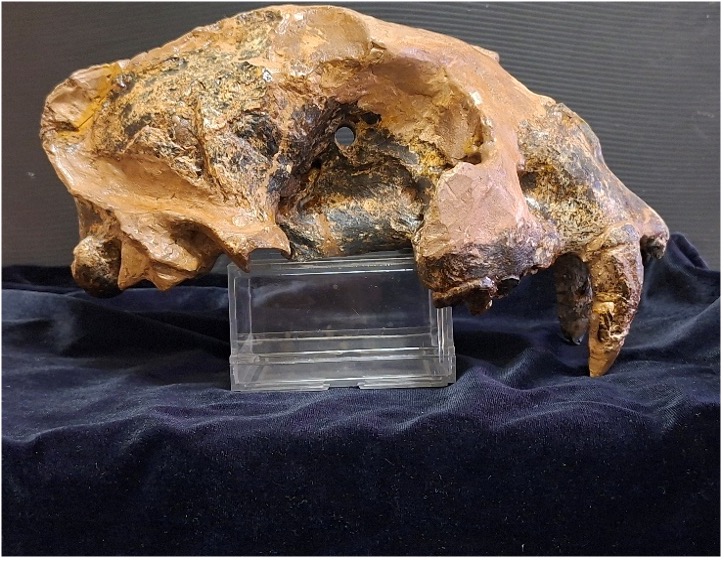
Figure 1. Dinofelis barlowi from Bolt’s farm.

Figure 2. Dinofelis piveteaui from Kromdraai A.
Detailed comparison of Dinofelis barlowi and Dinofelis piveteaui
The following outlines key differences in morphology, evolutionary history, habitat preferences, and ecological roles of the two species:
Morphological Differences
| Feature | Dinofelis barlowi | Dinofelis piveteaui |
|---|---|---|
| p3 Tooth (Lower third premolar) | Lacks a prominent anterior cusp (more pantherine-like). | Strong anterior cusp (more machairodont-like). |
| Size & Build | Smaller (~70–100 kg), more gracile, jaguar-sized. | Larger (~100–130 kg), more robust, lion-sized. |
| Skull & Canines | Shorter, less flattened canines; rounded skull. | Longer, more flattened canines; stronger zygomatic arches. |
| Limb Proportions | More agile, possibly arboreal tendencies. | More powerful, adapted for grappling large prey. |
Key Implications:
- D. barlowi had less stronger teeth, suited for a variety of prey.
- D. piveteaui had stronger slicing teeth, better for taking down larger herbivores.
Geographic Distribution & Habitats
| Aspect | Dinofelis barlowi | Dinofelis piveteaui |
| Regions Found | South Africa, Kenya, Ethiopia | |
| Preferred Habitat | Woodlands, forest edges, possibly more adaptable. | Open grasslands/savannas, likely competing with lions. |
| Coexistence with Hominins | Overlapped with early Homo Paranthropus and Australopithecus. | Lived alongside Homo and Paranthropus in Africa. |
Habitat Interpretations:
- D. barlowi:
- Thrived in diverse environments, from African woodlands to wooded grasslands.
- Its smaller size and agility suggest it hunted in denser vegetation, possibly ambushing primates and small ungulates.
- D. piveteaui:
- Dominated open plains and savannas, competing with other large carnivores like lions and Homotherium.
- Its robust build implies it specialized in larger prey, such as early zebras or antelopes.
Evolutionary Context & Ecological Roles
| Factor | Dinofelis barlowi | Dinofelis piveteaui |
| Time Period | Pliocene to Early Pleistocene (~ 5 4/3,5 –2 Mya). | Mid-to-Late Pleistocene (~2–1 Mya). |
| Evolutionary Stage | More primitive, closer to ancestral Dinofelis; more pantherine-like | More derived, specialized for power. More machairodont-like |
| Prey Preference | Smaller mammals, primates, juvenile ungulates. | Large ungulates, possibly hominins. |
| Extinction | Disappeared earlier, possibly outcompeted. | Persisted longer but declined with climate shifts. |
Key Evolutionary Notes:
- D. barlowi represents an earlier, more adaptable form, while D. piveteaui evolved into a specialized apex predator.
- Climate change (forests → grasslands) may have favoured D. piveteaui in Africa, while D. barlowi declined.
Were They Saber-Toothed?
- Both are considered “false saber-tooths”—less extreme than Smilodon but more so than modern cats.
- D. piveteaui was closer to a true saber-tooth (stronger canines, more machairodont adaptations).
- D. barlowi retained more pantherine-like traits (shorter canines, generalist hunting).
Conclusion: Two Hunting Strategies, Two Niches
- Dinofelis barlowi → A forest/jungle hunter, smaller, adaptable, pantherine-like.
- Dinofelis piveteaui → A savanna powerhouse, larger, saber-tooth adapted, competing with lions.
Together, these species highlight how Dinofelis evolved to occupy distinct ecological niches before becoming extinct in the Pleistocene. These two apex predators, along with other large cats are represented in the Plio-Pleistocene Palaeontology section at the DITSONG: National Museum of Natural History, which houses the type specimens of both species, as well as the remains of their prey, primarily Bovidae.
References
- O’Regan H. J. & Steininger C. 2017. — Felidae from Cooper’s Cave, South Africa (Mammalia: Carnivora). Geodiversitas 39 (2): 315-332. https://doi.org/10.5252/g2017n2a8
- Adams, J. W.; Rovinsky, Douglass S.; and R. Herries, Andy I., “Macromammalian faunas, biochronology and palaeoecology of the early Pleistocene Main Quarry hominin-bearing deposits of the Drimolen Palaeocave System, South Africa” (2016). KIP Articles. 3338.https://digitalcommons.usf.edu/kip_articles/3338
- Werdelin, L., and Lewis, M., E., A revision of the genus Dinofelis (Mammalia, Felidae), Zoological Journal of the Linnean Society, Volume 132, Issue 2, June 2001, Pages 147–258, https://doi.org/10.1111/j.1096-3642.2001.tb02465.
- Gommery, Dominique, Frank Sénégas, J. F. Thackeray, S. Potze, L. Kgasi, J. Claude, and Rodrigo Lacruz. “Plio-Pleistocene fossils from femur dump, Bolt’s farm, cradle of humankind world heritage site.” Annals of the Transvaal Museum 45, no. 1 (2008): 67-76.
- Joan Madurell-Malapeira, Antonio Rodríguez-Hidalgo, Hassan Aouraghe, Hamid Haddoumi, Saverio Bartolini Lucenti, Aïcha Oujaa, Palmira Saladié, Said Bengamra, Juan Marín, Mohamed Souhir, Mourad Farkouch, Hicham Mhamdi, Al Mahdi Aissa, Lars Werdelin, M. Gema Chacón, Robert Sala-Ramos, First small-sized Dinofelis: Evidence from the Plio-Pleistocene of North Africa, Quaternary Science Reviews, Volume 265, 2021,107028, ISSN 0277-3791, https://doi.org/10.1016/j.quascirev.2021.107028.
- Qigao Jiangzuo et al. Langebaanweg’s sabertooth guild reveals an African Pliocene evolutionary hotspot for sabertooths (Carnivora; Felidae). iScience, published online July 20, 2023; doi: 10.1016/j.isci.2023.107212
- Two New Species of Saber-Toothed Cats Identified in South Africa Jul 21, 2023, by News Staff
- Lacruz, R., Turner, A., and Berger, L, R., New Dinofelis (Carnivora: Machairodontinae) remains from Sterkfontein Valley sites and a taxonomic revision of the genus in southern Africa. Annals of the Transvaal Museum Volume 43, Issue 1 | 2006 pp. 89–106 https://hdl.handle.net/10520/EJC83643