DR RUTH SEGOMOTSI MOMPATI
By: Michael Tobolo, Junior Curator, DITSONG: National Museum of Military History
Early Life and Education of Dr Ruth Segomotsi Mompati
Dr Ruth Segomotsi Mompati was born on 14 September 1925 in Tlapeng, a rural area within Ganyesa village in the North West Province. At the time, this region was part of the Bophuthatswana Bantustan under the leadership of Kgosi Lucas Manyane Mangope, where she spent her childhood.Ganyesa is a small town located approximately 70 kilometres northwest of Vryburg and about 170 kilometres from Mahikeng, the provincial capital.
Ruth Mompati attended United Vryburg Primary School from 1933 to 1936, and then United Vryburg Higher Primary from 1937 to 1940, where she completed Standard 6. After working for two years as a child minder, she enrolled at the Tiger Kloof Educational Institution, originally known as the Moffat Institute. The institute was established by the London Missionary Society after three Batswana chiefs travelled to London to meet Queen Victoria in 1895, and it officially opened in 1904. At Tiger Kloof, she obtained her Native Lower Primary Certificate in 1944, which is equivalent to a primary school teaching diploma.
Two notable individuals educated at Tiger Kloof Institution were Sir Seretse Khama and Sir Quett Masire, both of whom went on to become presidents of Botswana. Dr Ruth Segomotsi Mompati was among the other distinguished members of the Batswana elite who also studied there.
The Bantu Education Act, passed in 1953, made it illegal to teach academic subjects to Black students. Refusing to compromise with the apartheid government, the missionaries withdrew from Tiger Kloof in 1955, leading to the school’s closure in 1962. It was later reopened in 1995, after former Tiger Kloof students and local businesspeople collaborated to revive the institution following Nelson Mandela’s release and the establishment of the new democratic government.
Dr Mompati began her teaching career in 1944 at Dithakwaneng Primary School near Vryburg and later taught at Vryburg Higher Primary until 1952, when she married. At that time, apartheid laws prohibited Black female teachers from remaining in their positions after marriage.

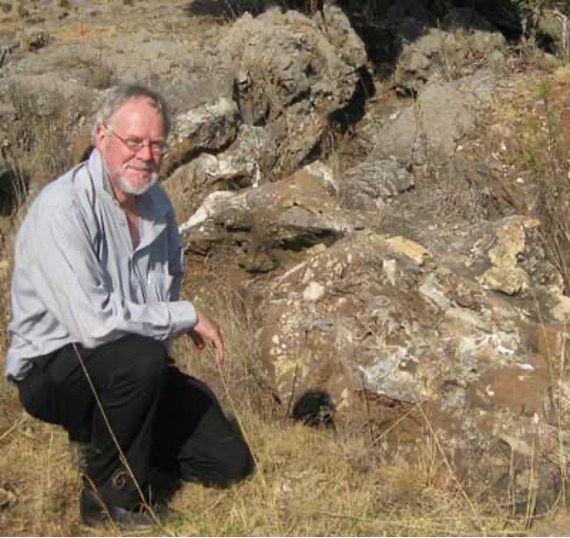
Dr Ruth Mompati pictured in 1987 during an interview with Diana Russel, reflecting on her dedication to education, activism, and the struggle against apartheid. (Source: https://video.alexanderstreet.com/watch/ruth-mompati-interview-by-diana-russell-south-africa-1987).
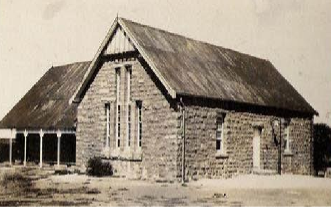
Historic Building of Tiger Kloof Educational Institution (Source: https://www.theheritageportal.co.za/article/historic-tiger-kloof-hall-reborn
Political Life and Career
Shortly after the Defiance Campaign in 1952, Dr Ruth Mompati moved to Johannesburg, where she studied typing and shorthand at a private school. In 1953, she began working as a secretary for Nelson Mandela and Oliver Tambo at their law practice. The following year, in 1954, she joined the African National Congress (ANC) and was elected to the National Executive Committee of the ANC Women’s League.
Dr Mompati, together with Helen Joseph, Dorah Tamana (President), Ray Simons (Secretary), and Lillian Ngoyi, was among the founding members of the Federation of South African Women (FEDSAW), launched in 1954. This multiracial anti-apartheid organization united approximately 230,000 women from various backgrounds to fight for political, social, and economic equality. FEDSAW is especially renowned for organizing the 1956 Women’s March against the pass laws. The Women’s Charter, FEDSAW’s foundational document, called for civil rights, equal employment opportunities, property and marriage rights, free education, and social welfare. These demands were central to the organization’s goals. FEDSAW became one of the most influential organizations in the struggle against inequality and apartheid, providing a crucial platform for women to participate in the broader liberation movement.
When the African National Congress (ANC) was banned in 1962, Ruth Mompati went into exile and underwent military training with Umkhonto we Sizwe (MK). Following her training, she held various roles in the ANC’s external missions, including Secretary and Head of the Women’s Section. She demonstrated remarkable leadership when the ANC sent her to represent South African women at the Women’s International Democratic Federation.
Between 1981 and 1983, she served as the ANC’s Chief Representative in the United Kingdom and Western Europe and was later elected to the ANC National Executive Committee. After the advent of democracy, she served as a Member of Parliament from 1994 to 1996, was appointed South African Ambassador to Switzerland from 1996 to 2000 and was elected Mayor of the Naledi Local Municipality (Vryburg) from 2000 to 2010.
In her honour, the district previously known as Bophirima in the North West Province was renamed the Dr Ruth Segomotsi Mompati District Municipality. The district comprises the following local municipalities:
- Greater Taung Local Municipality
- Kagisano-Molopo Local Municipality
- Lekwa-Teemane Local Municipality
- Mamusa Local Municipality
- Naledi Local Municipality

Dr Ruth Segomotsi Mompati MK and Struggle Veteran (Source: https://artsculturesa.wordpress.com/category/heroes-heroines/)
Military Service
After receiving military training in the Soviet Union as a cadre, Dr Ruth Segomotsi Mompati became one of the first women members of Umkhonto we Sizwe (MK), the armed wing of the ANC, and served in the Luthuli Detachment. She worked as a full-time cadre in exile and later served as an executive member of the MK Veterans’ Association. As one of the pioneering women in MK, she set an example for younger women, many of whom joined not only to fight apartheid but also to challenge traditional gender roles. Her participation allowed women to assert their equality with male counterparts, transform their traditional roles, and actively contribute to the liberation struggle while promoting gender equality.
Conclusion
Dr Ruth Segomotsi Mompati passed away on 12 May 2015 at the age of 89, following an illness at a hospital in Cape Town. She is remembered for her selflessness, resilience, and tireless dedication to the betterment of her people. Dr Mompati served fearlessly, leaving an indelible mark on national development, international solidarity, and the global struggle for women’s rights.
In her honour, the former Bophirima District was renamed the Dr Ruth Segomotsi Mompati District. Huston-Tillotson University established the Dr Ruth Segomotsi Mompati Scholarship Fund, she received the Platinum Class III Medal for Leadership from President Jacob Zuma in 2012, and she is commemorated through initiatives such as the Dr Ruth Segomotsi Mompati Young Innovators Showcase.
References
1. “Ruth Mompati – South African History Online”. sahistory.org.za.
2. Turok, Karina. (2006). Life and soul: portraits of women who move South Africa. Orford, Margie. Cape Town: 3. Double Storey. p. 50. ISBN 1-77013-043-8. OCLC 70536542.
4. Ruth, Mompati (1970). The road to democracy: South Africans telling their stories (PDF). South African democracy education trust: Tsehai publisher and distributors. p. 307.
5. “Ruth Mompati | South African History Online”. sahistory.org.za. Retrieved 29 December 2019.
6. “Premier David Makhura pays tribute to struggle stalwart, Dr Ruth Mompati | South African Government”. gov.za. 12 May 2015. Retrieved 29 December 2019.
7. “The Spirit of Freedom”. cdlib.org.
“Talks between the government and ANC on negotiations proceed | South African History Online”. sahistory.org.za. Retrieved 29 December 2019.
8. “South Africa mourns struggle stalwart Ruth Mompati”. southafrica.info.