HIGH TEA IN THE LATE 19TH CENTURY
By: Dineo Maloka, Junior Curator – DITSONG: National Museum of Cultural History
Introduction
During the 19th century ‘high tea’ was more than a culinary tradition; it was a significant cultural and social phenomenon. It functioned as a contested site of gendered agency, class negotiation, and emerging political discourse (Mason, 2004, p. 218). In a period marked by political upheavals and social change, high tea provided women with a space to connect, share experiences, and subtly challenge societal norms. It served not only as a social gathering but also as a platform for discussing politics, raising awareness about women’s issues, and strengthening community networks.
Historical Background
High tea originated in Britain as a hearty, late afternoon meal for the working class, eaten at a high dining table and typically consisting of hearty dishes such as meat, bread, and pies after a long day’s labour. The term high tea refers to the high dining table and chairs, in contrast to the low tables used for afternoon tea. By the 1870s, the tradition had been adopted by the emerging middle class – and importantly, by women – who leveraged the convivial setting to forge networks, exchange ideas, and subtly contest patriarchal norms (Bush, 2011, p. 92).
Origins and Evolution of High Tea
High tea is often confused with “afternoon tea,” yet scholars differentiate the two: high tea was a working-class meal served at a high table between 5 p.m. and 6 p.m., while afternoon tea was a more genteel, low-table social affair (Flandrin, 2007, p. 45). Mason (2004, p. 220) traces this terminological shift to the 1860s, when the expanding railway network enables the distribution of tea, sugar and baked goods to urban labourers, transforming both the practice and its social significance.
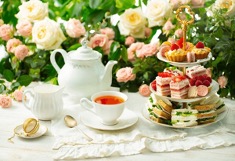
Figure 1. Example of a high-tea table set with tea and an assortment of refreshments (Source: Headmaster International).
Dress Code and Design
Women attending high tea often dressed in elegant and sophisticated attire, commonly featuring floral pattens, lace, and pastel colours, which were popular at the time. These choices represented a departure from traditional notions of femininity, allowing women to express individuality while still adhering to societal expectations.
Accessories played a crucial role: decorative hats were both functional and statements of style, forming a staple of social events and typically worn with tea gowns. Gloves were another important accessory, signalling social status and personal hygiene. While gloves were worn for formal occasions, a lady might remove them while eating.
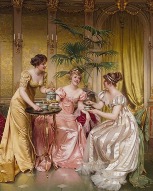
Figure 2: Afternoon tea by Frédéric Soulacroix (Source: https://recollections.biz/blog/a-brief-history-of-victorian-afternoon-tea/).
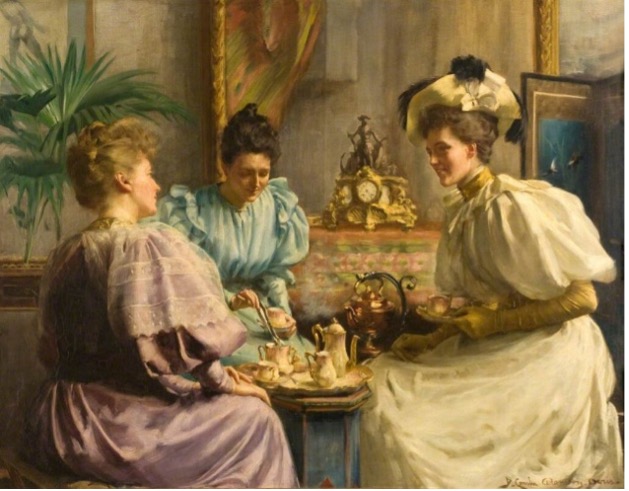
Figure 3. 5 o’clock tea by David Comba Adamson (1859-1926), n.d. (Source: Dundee Art Gallery and Museum).
Gendered Spaces and Networks
Bush (2011) argues that high‑tea gatherings provided women a rare “semi‑public” arena in which to negotiate power, noting that “the ritual of pouring tea became a metaphor for the pouring of ideas” (p. 95). This view is reinforced by Stacey (2015), who documents the emergence of women‑led benevolent societies in the Cape Colony that used tea meetings to organize charitable campaigns and discuss suffrage (p. 112). High tea thus operated as a space where women could cultivate social networks, exchange ideas, and subtly challenge existing hierarchies within a socially acceptable framework.
Conclusion
Although rooted in a Victorian culinary tradition, high tea in late-19th century South Africa emerges as a multifaceted cultural phenomenon that both reflected and reshaped gendered and colonial power relations. Its transplantation from the industrial heartlands of Britain to the colonial periphery was not a simple replication of British habits; rather, it became a contested space in which social hierarchies were simultaneously reproduced and subverted. High tea functioned on a dual axis: it facilitated the diffusion of imperial cultural capital while providing colonized women with a platform to exercise agency, forge networks, and challenge patriarchal structures. These findings underscore the ways in which everyday social rituals can embody broader historical forces and highlight the importance of ethical, community‑centered approaches to the display and interpretation of such practices.
References
https://theseamstressofbloomsbury.co.uk/blogs/seamstress-blog/history-of-the-tea-dress?srsltid=AfmBOop31ufTIkoNURyfAiCbC5cZtuzHlboWV02xADANYLpAZmitZqA0 https://recollections.biz/blog/a-brief-history-of-victorian-afternoon-tea/
Mason, J. (2004). ‘High Tea and the Victorian Social Fabric’, Journal of Social History, 38(2), pp. 215‑236.
Bush, L. (2011). Women, Tea and the Making of the Modern British Social Sphere. London: Routledge.
Flandrin, J.-L. (2007). The History of Food. Cambridge: Cambridge University Press.
Stacey, R. (2015). ‘Benevolent Societies and Women’s Networks in Cape Colony’, South African Historical Journal, 67(4), pp. 109‑126.