HISTORIC WARS AND FOOD INSECURITY
By: Abraham Mohale: Junior Curator, DITSONG: National Museum of Military History
Introduction
Many of today’s food crises are closely linked to wars and violent conflicts. This article outlines four key dynamics of wars which conflict have an impact on food (a) food insecurity, (b) displacement (c) food control, and (d) the use of hunger as a “weapon of war”. These dynamics help explain why governments or belligerents are often unable or unwilling to address food crises effectively. They also shed light on why humanitarian assistance faces challenges in reaching people in need, while simultaneously trying to avoid conflict and prevent future food crises. This article addresses the importance of recognizing food as a fundamental human right and various strategies to maintain food security and availability, even amid difficult wars and violent conflicts. According to the 1996 World Food Summit, food security exists when all people at all times have physical and economic access to sufficient, safe and nutritious food that meets their dietary needs and food preferences for an active and healthy lifestyle. Food security has four interrelated elements, namely:
- Availability – refers to food supply and trade of food, not just quantity but also its quality and diversity. Improving availability requires sustainable productive farming systems, well managed natural resources and policies to enhance productivity.
- Access – covers both economic and physical access to food. Improving economic access means enabling smallholder farmers to participate more effectively in markets, allowing them to generate more income from cash crops, livestock products, and other enterprises.
- Utilization – focuses on how the body uses the various nutrients in food. It involves personal health, feeding practices, food preparation, diet diversity, and the distribution of food within households. Improving utilization requires promoting better nutrition and food safety, increasing diversity in diets, reducing post-harvest losses and adding value to food.
- Stability – concerns consistent availability and access to food over time. Food insecurity can be temporary, triggered by short-term shocks, such as poor harvests (the results of a bad season), a change in employment status, conflict, or increases in food prices. These disruptions disproportionately affect the poor, who are at risk, because they spend a larger share of their income on food.
Food Insecurity and Conflict Dynamics
War is often characterized by destruction and the large-scale displacement of people, both of which significantly impact food security. Armed conflicts disrupt agricultural systems, reduce access to food, and create situations where communities struggle to meet their nutritional needs. A historical example is the Anglo-Boer War – now commonly referred to as the South African War (1899-1902) – which had a profound impact on food security in South Africa. The war led to widespread shortages and hardships among the Boer and British populations, as well as among Black Africans. Agricultural production was interrupted, large numbers of people were displaced, and food distribution networks collapsed. This resulted in starvation, malnutrition and the spread of disease. The British Empire mobilised vast resources during the war, which cost the British government £210 million – equivalent to approximately £25 billion today. It resulted in over 120 000 British and imperial casualties, including 22 000 deaths. Notable, two thirds of these deaths were not due to battle injuries but to disease, hunger and inadequate medical care. One of the most devastating strategies employed during this war was the Scorched Earth Policy, a military tactic aimed at denying the enemy the resources needed to sustain resistance. This involved the systematic destruction of crops, livestock, homes, infrastructure, and water sources. British General Lord Kitchener, recalled from India to lead the military campaign, ordered his troops to remove all means of survival from the Boers, effectively starving them into submission.
This brutal strategy has been used in various conflicts throughout history. During the Patriotic War of 1812, Russian forces adopted scorched earth tactics to halt Napoleon’s advance in 1812. In World War II, similar tactics were used following Operation Barbarossa (invasion of the Soviet Union by Nazi Germany). More recently, scorched earth strategies have been used in the ongoing Russia-Ukraine War, with cities like Bakhmut, Mariupol and the Azovstal plant suffering near-total destruction. In 1938, during the Second Sino-Japanese War, The Chinese government used the Yellow River as a weapon to aid its cause by opening the dikes of the river to stop the advancing Japanese forces. This led to a flood that destroyed thousands of villages, as well as corn and rice fields, and affected 12 million people, an estimated 800,000 of whom drowned in the floods of the river.
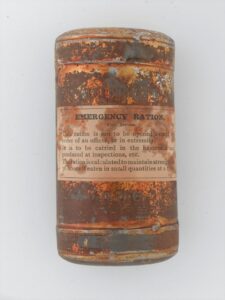
Figure 1. Emergency food ration tin, for field service, circa 1900. Made by Bovril Ltd London (Source: https://collection.nam.ac.uk/detail.php?acc=1997-08-75-1.
The Impact of Military Operations: The Battle of Isandlwana (1879)
The Battle of Isandlwana, fought during the Anglo-Zulu War in 1879, serves as a powerful example of how logistical challenges – particularly those related to food supply – can influence the outcome of military campaigns. The British army struggled to maintain adequate food supplies, and their slow overstretched supply lines hindered both mobility and operational effectiveness. The constant need for resupply limited their ability to launch a swift or decisive offensive.
Although Isandlwana is a specific historical event, the logistical challenges it highlighted resonate with broader discussions about food security. The battle serves as a reminder of the critical role food supply plays in military operations – and, by extension, the importance of sustainable food systems in any large-scale human endeavour. While the British camp at Isandlwana had a substantial number of supplies, including food, the Zulu army’s swift victory and sequent looting of the camp led to widespread food shortages for the British. In contrast, the Zulu forces were self-sufficient, relying on their own agricultural systems and local food sources. Their capacity to sustain themselves without long, vulnerable supply lines gave them a critical advantage in the conflict.
Food Insecurity and Social Disruption During the Mfecane Wars (19th Century)
The Mfecane Wars, which took place in southern Africa during the early 19th century, were a period of widespread conflict, migration, and social upheaval. These wars had a profound impact on food security across the region. Warring groups frequently raided and pillaged villages, destroying crops and seizing harvests. This directly disrupted food production and supply, leading to severe shortages and famine. As villages were attacked or abandoned, people were forced to flee their homes and farms, often migrating into areas that were already struggling with food scarcity – further compounding the crisis.
The Mfecane wars caused significant social upheaval and led to the fragmentation of communities, the collapse and disruption of traditional social structures, and the breakdown of established systems of food distribution and trade networks.
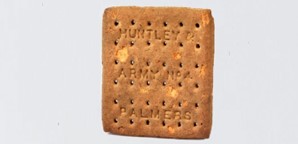
Figure 2. British made army issue ration biscuit. This example ‘Huntley & Palmers Army No 4’, was made by the well-known biscuit manufacturers Huntley and Palmers during the First World War. (Source: http://www.ijy.cc/2016/06/huntley-and-palmer-biscuits-army_23.html)
Food Insecurity as a Weapon of War
Detailed Food Breakdown for Soldiers During World War I and II
During World War I and II, soldiers were issued different types of rations depending on their location and circumstances.
- A-rations were standard meals for troops in garrison and consisted mainly of fresh or refrigerated foods.
- B-rations were preserved, non-perishable foods such as canned goods, intended for use when fresh food was not available.
- C-rations were individual, pre-cooked, canned meals designed for easy consumption in the field. These included items like ham and eggs, meat stews, and other ready-to-eat combinations.
- K-rations were compact meal kits developed for short combat missions. They contained breakfast, lunch, and supper items, along with accessory packs that included essentials like cigarettes, chewing gum, and can openers.
- D-rations or emergency rations were highly concentrated, high-energy items such as chocolate bars, used in situations where regular meals were unavailable.
Staple foods included mutton or beef, potatoes, and bread to provide energy and keep soldiers full. One of the most commonly issued and most disliked items was the hardtack biscuit. These dry, extremely hard biscuits were often considered inedible. Soldiers frequently crumbled them into water to create a paste that could be mixed with vegetables or stew. Many complained that hardtack was so tough it could crack their teeth.
Gaza: The Weapon of Food
The humanitarian crisis in Gaza has reached a devastating point, with food aid increasingly weaponized as a tool of political strategy rather than relief. The outcry of international humanitarian organizations seems to have fallen on deaf ears. Israeli forces have reportedly targeted food distribution centres and humanitarian aid stations, turning them into sights of ambush and attack. Humanitarian corridors are always blocked, while hospitals lie in ruins. Efforts to secure a ceasefire and permanent solution have collapsed because of deeper tensions over control, legitimacy and governance of the Gaza strip. The ongoing conflict in Gaza is marked by a multitude of deeply rooted problems, made even more difficult to resolve by its complex historical context. Among the most harrowing aspects is the deliberate starvation of civilians, a tactic that inflicts intense suffering and threatens to normalize such crimes in future conflicts. Such actions are not morally reprehensible but also explicitly illegal. The use of starvation is prohibited under Article 54 of Additional Protocol I to the Geneva Conventions and is classified as a war crime under Article 8(2)(b)(xxv) of the Rome Statute of the International Criminal Court.
Conclusion: The Right to Food in Conflict
From ancient wars to modern-day crises, the use of food – or the denial thereof – as a weapon of war continues to exact a heavy toll on civilian populations. Historically, unconventional and often brutal methods – such as mass killings and deliberate starvation – have shaped the course of conflicts and left lasting generational scars. Under international human rights law, access to food is recognised as a fundamental human right. This right obliges states and non-state actors such as international organizations to respect, protect, and fulfill people’s right to access adequate food. In times of crisis when people have no access to adequate food, the governments are required to take emergency measures to ensure equal access to food across the population (OHCHR and FAO, 2010). International humanitarian law more specifically protects access to food during armed conflict. It addresses, on the one hand, the devastating effects of the logic of war mentioned above and, on the other, regulates humanitarian law prohibiting the starvation of civilians as a method of warfare.
Sources
https: //www.veticannews.v.g
https://wikepedia org z wiki scorched earth
Wikipedia hhps://en Wikipedia.org