REMEMBERING ELISABETH S. VRBA (1942-2025)
By: Lazarus Kgasi, Junior curator: Plio-Pleistocene Palaeontology, DITSONG: National Museum of Natural History
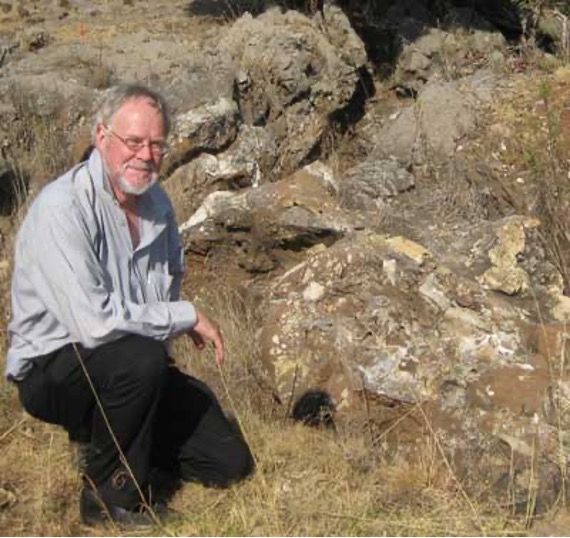
Dr Elisabeth Vrba at Kromdraai (image by John Reader/Science photo library).
Elisabeth Vrba was born in Hamburg, Germany on 17 May 1942. She studied zoology at the University of Cape Town from 1964 to 1967. In 1968, she taught biology and mathematics at St. Alban’s College in Pretoria; one of her pupils was Francis Thackeray. That same year, she visited the Transvaal Museum (now DITSONG: National Museum of Natural History). On the recommendation of John Robinson and Bob Brain, she chose to focus her PhD research on fossil antelopes (Bovidae) from Sterkfontein, Swartkrans and Kromdraai in what is now the UNESCO-listed Cradle of Humankind World Heritage Site.
Her work contributed to an understanding of bovid evolution, palaeoenvironments and biochronological dating. Most notably, she formulated the “Turnover Pulse Hypothesis”, which explains changes in the diversity of Bovidae and other fauna in the Plio-Pleistocene in Africa.
Vrba worked in the Museum’s Department of Palaeontology and Palaeoenvironmental Studies before becoming deputy director. Between 1976 and 1986, she undertook excavations at Kromdraai and Gondolin. In 1986, she accepted a post at Yale University in the United States, and interacted closely with Harvard palaeontologist, Stephen Jay Gould. Together, they developed the concept of “exaptation”, which describes how traits originally evolved for one function can later be co-opted for another – such as the transformation of feathers from insulation structures into adaptations for flight.