THE HISTORY OF SWARTKRANS: A WINDOW INTO DEEP TIME
By: Lazarus Kgasi, Junior Curator, DITSONG: National Museum of Natural History
The Swartkrans cave complex, located northwest of Johannesburg, South Africa, is among the world’s most significant palaeoanthropological sites. Its history of scientific research spans over seven decades and can be divided into four key phases:
1. The Pioneers (1948-1951): Legendary palaeontologist Robert Broom (1866-1951), together with John Robinson (1923-2001), initiated the first formal excavations in 1948. Broom’s work here was a direct continuation of his groundbreaking discoveries at nearby Sterkfontein.
2. The Robinson’s Era (1951-1953): Following Broom’s death in 1951, John Robinson continued the excavations until 1953.
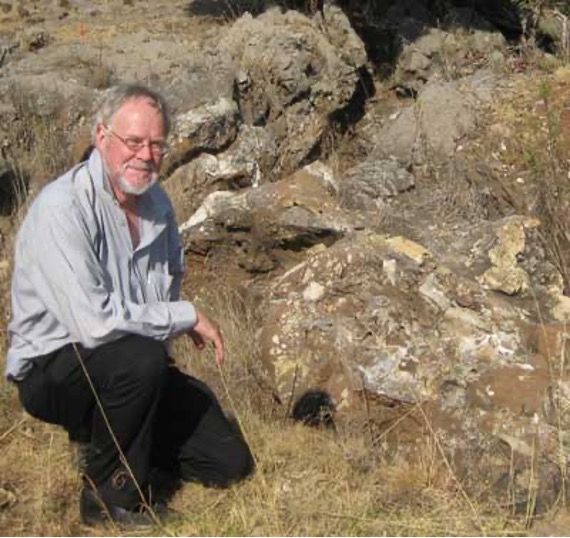
3. The Brain Revolution (1965-1980s): C.K. (Bob) Brain (1931-2023) resumed excavations at Swartkrans in 1965, introducing transformative approaches. He spent several years sorting through rubble from earlier lime-mining activities, and then another seven years meticulously exposing the full extent of the cave system. His subsequent excavations established the site’s detailed stratigraphy (rock layers), identifying the five principal members (units) of the Swartkrans Formation that are still used today.
4. Modern Research (2005-Present): The Swartkrans Palaeoanthropology Research Project (SPRP), under T.R. Pickering, launched new excavations in 2005. This ongoing research continues to refine the dating and stratigraphy of the site, steadily enhancing our understanding of Swartkrans.
The Pivotal Role of the DITSONG: National Museum of Natural History
DITSONG: National Museum of Natural History (formerly the Transvaal Museum) has been central to the discovery and study of fossils from Swartkrans. This role is multifaceted:
Prominent palaeontologists such as Robert Broom, John Robinson and C.K. Brain were affiliated with the Museum, making it the central institution driving the research, funding, repository, and scientific oversight of the excavations for decades.
The Museum serves as the primary repository for the vast collection of Swartkrans fossils, undertaking essential tasks of cleaning, preparing, cataloguing, and safely storing these irreplaceable national treasures.
By curating the Swartkrans historical collection, the DITSONG: National Museum of Natural History provides researchers from South Africa and around the world access to these specimens, supporting the ongoing process of discovery and interpretation.

Swartkrans has yielded a wealth of fossils that reveal the complexity of our ancient past. The site is famous for its abundant remains of Paranthropus robustus (as seen in figure 2), a robust, large-toothed hominin. Equally significant are the fossils of early members of our own genus, Homo (as seen in figure 1), indicating that at least two different hominin lineages coexisted in this landscape.
The cave has yielded not only fossilised bones but also stone and bone tools, evidence of butchery, and the highly debated evidence of early fire use (from Member 3, dated to around 1 million years ago).
These fossils and artefacts come from distinct layers, allowing scientists to place them in a precise chronological sequence:
- Member 1: The oldest, dated to between approximately 2.2 and 1.7 million years ago. It has yielded Paranthropus and early Homo.
- Member 2: Deposited between ~1.8 and ~1.0 million years ago, also containing both Paranthropus and Homo.
- Member 3: Around 960,000 years old, containing P. robustus and the debated fire evidence.
The Swartkrans fossil site, along with the fossils that are curated at DITSONG: National Museum of Natural History’s Plio-Pleistocene Palaeontology section, represents a cornerstone of South Africa’s heritage for several reasons:
A Pillar of Global Heritage: Swartkrans is a key component of the UNESCO World Heritage Site known as the “Cradle of Humankind.” It physically anchors South Africa’s status as the birthplace of humanity, a narrative of immense global and national significance.
A Source of National Pride: The deep history preserved within these caves offers a unique and powerful source of identity and pride for all South Africans. It tells a story that predates colonial history, stretching back millions of years on the very soil walked by generations today.
A Scientific Lighthouse: The ongoing research at Swartkrans demonstrates South Africa’s leading role in the field of palaeoanthropology. The site continues to attract world-class scientists and students, contributing to education and building local scientific capacity.
A Cultural and Tourist Asset: Swartkrans and its fossils serve as a major draw for cultural tourism, educating the public while contributing to the local economy.
In conclusion, the history of exploration at Swartkrans, championed by the DITSONG: National Museum of Natural History’s Plio-Pleistocene Palaeontology section, has yielded compelling evidence of our shared evolutionary past. The fossils from these caves are far more than just ancient remains – they are a fundamental part of South Africa’s contribution to the world’s understanding of human origins.