THE MILITARY ROLE OF A NEW SOUTH AFRICA (1998-2000)
By: David Rilley-Harris, Curator, DITSONG: National Museum of Military History (DNMMH)
Following the 1994 elections, South Africa entered a new era in which its military capabilities were required to operate within a new context. Military power was no longer needed to defend and enforce Apartheid; instead, it would be mobilized to support a new role for South Africa in continental affairs. With its newly integrated military in the form of the South African National Defence Force (SANDF), South Africa would embark on a new foreign policy doctrine defined in the 1998 White Paper on South African Participation in International Peace Missions. South Africa viewed itself as the stable comparatively wealthy African country on a continent harassed by poverty and instability. South Africa also attracted international attention for its potential in diplomacy and the prospect of rapid growth in strength and wealth. These perspectives, plans, and hopes were communicated in a resurrection of Second World War era references to “African Renaissance.” In 1997, at the “Attracting Capital to Africa” summit in Virginia, USA, Thabo Mbeki said, “But still, outside of our continent, the perception persists that Africa remains as of old, torn by interminable conflict, unable to solve its problems, condemned to the netherworld. Those who have eyes to see, let them see. The African Renaissance is upon us.”
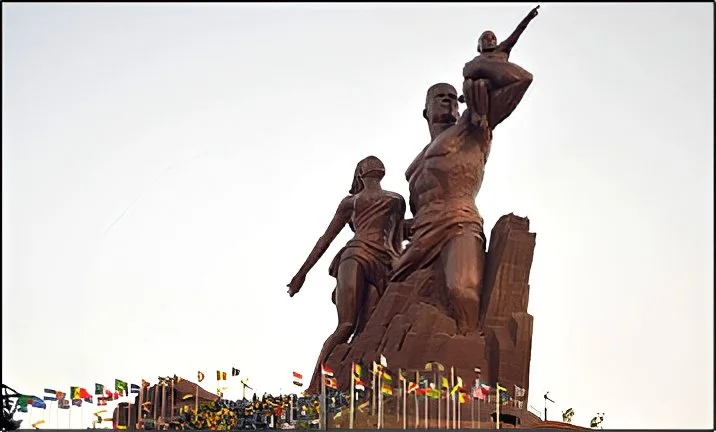
(Picture: Seyllou/AFP/Getty Images).
Militarily, the Renaissance doctrine for South Africa involved improving stability primarily in the southern African region, as well as across the African continent as a whole. Furthermore, to South Africa’s advantage, the SANDF was expected to be an active participant, and in some cases, a dominant force in these efforts. The doctrine and the White Paper would need to be formulated in a manner that positions South Africa above intra-continental divisions, rather than drawing it into them. Renaissance would require internal continental leadership to promote stability through democracy, and economic regeneration through trade and integration. South Africa seemed poised to be ideally set for the task of leading the way. The 1998 White Paper included five key pillars. South Africa would engage militarily beyond its borders only with support from international bodies. Military force would need to be complemented by national developmental support aimed at assisting the civilian population in all areas of deployment. Spill-over effects of military intervention such as refugees or illicit arms dealing would need to be prevented. Deployments would need to be accountable to the South African Parliament, and peace-enforcement should be kept to a minimum and an emphasis placed on deployments where all combative parties agree to the South African peacekeeping presence.
Operation Boleas was carried out in 1998. If anybody thought that the gods were on South Africa’s side they would have found confirmation in South Africa’s first test. The small country of Lesotho, landlocked within South African territory, was about as gentle as a first deployment could be. After a disputed election, a military mutiny and civil unrest was threatening Lesotho’s stability. Under the banner of the Southern African Development Community (SADC), South Africa moved with Botswana forces into Lesotho. All parties did not agree to South Africa’s presence but the need to defend democratic election results aligned with the purpose of providing stability through democracy. Lesotho’s capital, Maseru, suffered significant damage during intense fighting because of a less than potent arrival of South African forces but a coup was successfully prevented. This marked South Africa’s first major military intervention since the 1994 elections. Although it was a peace-enforcement mission rather than a peacekeeping operation, it involved SADC and successfully maintained stability in Lesotho.
Operation Espresso was in 2000 in Ethiopia/Eritrea regarding a border dispute. South Africa provided a few military liaison officers and observers complementing the United Nations Mission in Ethiopia and Eritrea (UNMEE) and the Organisation of African Unity Liaison Mission in Ethiopia and Eritrea (OLMEE). While this was a neat South African cooperation on the far side of the continent, it was Operation Mistral the year before in the Democratic Republic of the Congo (DRC) in 1999, which would mark the beginning of the new South Africa’s true test. Operation Mistral marked South Africa’s first formal entry into United Nations peacekeeping efforts. South Africa supported the United Nations Mission in the Democratic Republic of Congo (MONUC) sending soldiers and acting as the primary mediator in the peace talks which led to the Sun City Agreement. In a spectacular example of mission creep, a quarter century later South Africa is still embroiled in the DRC conflict which has severely tested every tenant of the Renaissance and 1998 White Paper.
(Picture: Reuters).
These first three post-1994 military operations beyond South Africa’s borders provided early evidence of the country’s intentions leading into the 21st century where South Africa would see more successful missions, and some failures. South Africa’s intention was to become a moral diplomatic leader on the continent backed by far reaching military capabilities. This was described as an enlightened self-interest where South African prosperity and stability would be assisted by promoting the same throughout Africa.
With so many internationally sought after resources being sourced from African countries, this idea of accepting military expense in service to Africa was not new and the peacekeeping costs had traditionally fallen to powers outside of the continent. Up until South Africa’s 1994 election the conflicts in Africa had been expensive to deal with and there was a danger that any movement of South Africa into the peacekeeping space could see a commensurate withdrawal of funds from powers based outside Africa. Where the international community had largely failed to stabilise the continent in previous decades it seemed unlikely that South Africa would grow to succeed. South Africa would have to avoid becoming embroiled in foreign African conflicts requiring the retention of high South African moral standards and discipline. South Africa would likewise have to avoid falling under the influence of extra-African powers seeking to prioritise the securing of mineral resources. All of this would require South Africa’s economy to grow enough to uphold a commitment to covering the costs of its military power.
The concept of an African Renaissance was not new, but the prospect of South Africa emerging as a power capable of facilitating it, was a new and exciting if not overzealous opportunity.