THE SOUTHERN GROUND HORNBILL
By: Mpho Khalo, junior curator: Ornithology, DITSONG: National Museum of Natural History
Figure 1. The Southern ground hornbill (Bucorvus leadbeateri) (Photo captured in display at the DITSONG: National Museum of Natural History).
Introduction
The Southern Ground Hornbill is an extraordinary bird and the largest hornbill in the world. Native to the savannas and woodlands of Sub-Saharan Africa, this remarkable bird possesses several unique characteristics. Standing up to one metre tall with a wingspan of nearly two metres, it is an impressive sight. Males can weigh up to 4.2 kilograms, while females are slightly smaller, reaching 3.3 kilograms. The species is distinguished by its black, decurved casque-topped bill. Males have striking red facial skin, whereas females feature a dark violet-blue throat patch, making gender identification easy.
Nesting and Behaviour
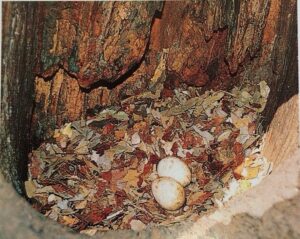
Figure 2. Nest of a Southern Ground Hornbill (Source: Kemp, Alan; Begg, Keith (1996). “Nest sites of the Southern Ground Hornbill Bucorvus leadbeateri in the Kruger National Park. Illustrated by Martin Woodcock).
The selection and preparation of the nesting environment must be conducive and suitable for breeding. The southern ground hornbill carefully evaluates multiple factors when selecting a site, ensuring the presence of suitable cavities and proximity to abundant food sources. These cavities are naturally occurring and are commonly found in large, old trees or along rocky cliff faces. Often deep, they provide crucial protection for the nest. Once a suitable site is selected, the bird lines its nest with dry leaves and grass.
Southern ground hornbills have a complex social structure, living in groups that consist of a breeding pair and several helpers. They are highly territorial and primarily forage on the ground, hunting a diverse range of prey, including amphibians, reptiles, small mammals and insects.
The nest of the southern ground hornbill is lined with dry leaves and grass to help absorb moisture and contain the chicks’ droppings.
Breeding
The breeding process of the southern ground hornbill is complex and fascinating, marked by several unique characteristics, including cooperative breeding. These birds live in social groups led by a dominant breeding pair, with male offspring serving as helpers. The helpers play a vital role in defending the territory, providing food for the incubating female, and assisting in raising the chicks. Incubation lasts approximately 40 – 45 days, during which the female remains in the nest for extended periods. She is solely responsible for incubation and does not leave the nest throughout the process., Instead, she receives food from other group members by extending her neck to the nest entrance, where the males deliver nourishment. The ideal breeding season occurs during the rainy months, typically between September and December, when food availability is more abundant.
Conservation
The southern ground hornbill faces significant conservation challenges, with several key threats impacting its survival:
- Habitat loss: The destruction and fragmentation of savanna and grassland ecosystems due to agricultural expansion.
- Urbanization: Human development encroaching on their natural habitat.
- Loss of nesting sites: This species requires vast territories — over 250 km² — and large, mature trees for nesting.
- Persecution: In some areas, they are killed due to superstitions or because they are seen as a nuisance.
In South Africa, the species is already endangered. However, conservation efforts, such as those led by the Mabula Ground Hornbill Project, are helping to protect and restore its population. The project provides artificial nest boxes to compensate for the loss of natural nesting sites, rescues and rehabilitates chicks before reintroducing them into the wild, and conducts research and monitoring to ensure successful reintegration.
Southern ground hornbills have an exceptionally long lifespan, comparable to that of humans, reaching up to 70 years. However, their slow breeding rate makes population recovery a challenge, further emphasizing the need for conservation efforts.
Conclusion
The Southern ground hornbill relies primarily on its keen vision and sharp senses for hunting. Unlike many other bird species, it rarely drinks water, instead obtaining most of its hydration from the prey it consumes, including amphibians, snakes, insects and small mammals. Studies have also observed that some male southern ground hornbills develop a blue patch on their necks, which appears to be associated with submissive behaviour rather than dominance.
Thanks to the Mabula Southern Ground Hornbill Project, communities are being educated about these remarkable birds while conservation efforts help protect them from major threats.
References
DITSONG: National Museum of Natural History Ornithology collection.
Kemp, Alan; Begg, Keith (1996). “Nest sites of the Southern Ground hornbill Bucorvus leadbeateri in the Kruger National Park. Illustrated by Martin Woodcock).